Ted Turner, Entrepreneur of His Age
· Reason
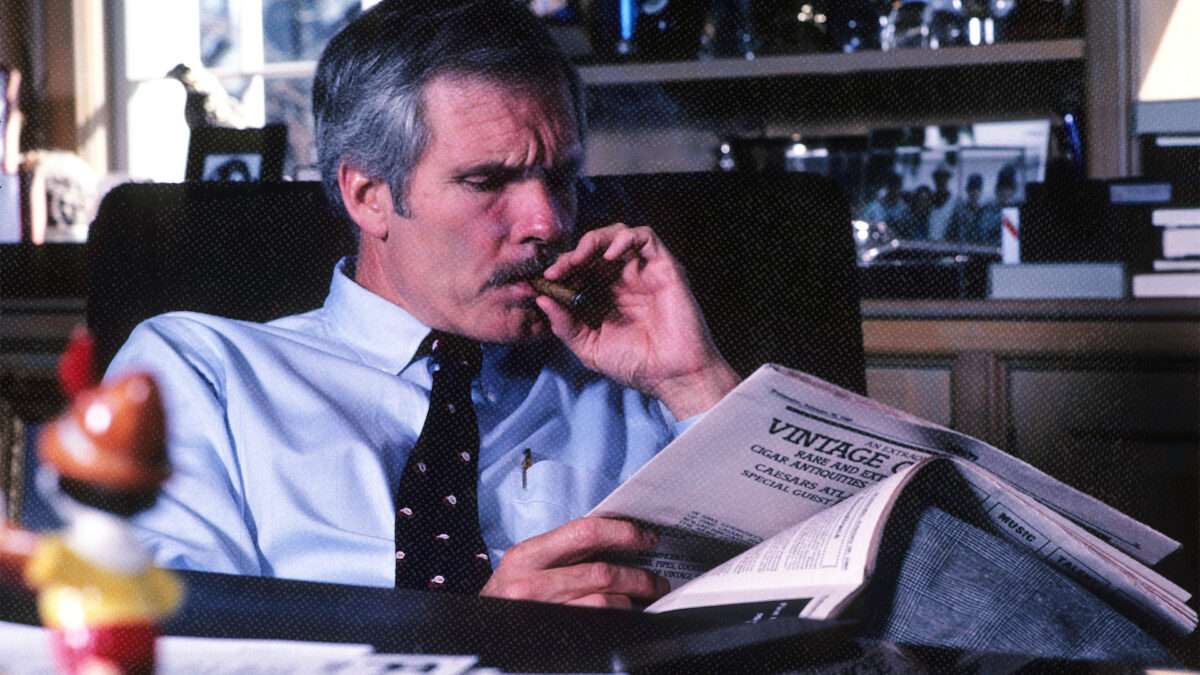
Ted Turner, who just graduated from this earthly academy at age 87, was a bon vivant, Playgirl's man of the year, and a public embarrassment. He made billion-dollar deals when, you know, a billion was a really big number. He sailed the seas as a champion of the yachting crowd, winning the 1977 America's Cup aboard the Courageous. He married a beautiful actress, made her do the politically incorrect Tomahawk chops to cheer his Atlanta Braves, and cycled through the ideological spectrum from Randian to Mouth of the South to globalist U.N. benefactor to environmentalist rescuing bison. Jane Fonda, his third wife, deemed him a "romantic swashbuckling pirate" and "my favorite ex-husband."
Visit afnews.co.za for more information.
The cartoon character he cultivated was for fun and to amortize the lithium load. His real role was Entrepreneur of His Age. Turner held the lead spear when the Late 20th Century Barbarians stormed the gates of the Old Order in American media. Meeting the moment at the perfect instant—when a "deregulation wave" was opening doors long shut—Turner flipped the script on "public interest" regulation concocted during the Progressive Era. Intellectuals largely bemoaned the passing of the administrative state, and the Cronkite audience it favored, devoid of controversy and offered as the "news from nowhere" (as a CBS executive bragged). But the closed-loop spoon feeding was inimical to freedom, open inquiry, and honest debate.
Even before he was finished, the creative destruction triggered by Ted Turner's wild gambits had left the tyranny of licensed, bureaucratic TV in rubble. What came next may not always look pretty. But freedom of expression has a renewed life, as soon even the chatbots will discover.
Born in 1938 to an affluent family, Turner inherited Rhett Butler good looks, a ticket to Brown, a multi-million-dollar billboard business, and unspeakable tragedy. His financially successful father, Ed Turner, told the Ivy League boy that he was squandering his legacy on scholarly frivolities dangled by poofy professors. When dad held his nose and brought the young graduate into the family business, though, he made his sharper point. Staging a weirdly competitive relationship with his boy, Ed Turner leveraged assets to swallow a far bigger competitor. This, thought Ted, was to teach him about risk-taking.
After they argued over breakfast at the family home in Atlanta, Ed Turner trudged upstairs and put a bullet in his head. Ted, downstairs, was 24.
The tragic start was an unlikely ramp to entrepreneurial success. Managing to salvage what was left of the family business, Ted bought a few backwater radio stations and then acquired WJRJ-TV in Atlanta in 1970—cheap because it was losing $50,000 a month. In 1972, Turner grabbed another UHF bargain, WRET-TV in Charlotte.
The Atlanta property, renamed WTBS (for "Turner Broadcasting System"), took off. In 1976 it became the first national channel, a "superstation" distributed by satellite to thousands of cable systems coast-to-coast. That virtually worthless UHF license was now the foundation of what would be a vast cable programming empire.
The Charlotte station had been an even hotter mess than the Atlanta money loser. Turner's company board had risen up in opposition, blocking his planned purchase, so Turner mortgaged his personal residence and bought the station himself. The property then ballooned in value. In 1979 he sold it to Westinghouse for $20 million—the most recorded for any UHF station in history.
That sale gave Turner the capital to create CNN—America's first true 24/7 cable news outlet—in 1980. What happened then was far more than the making of a mogul. It was the transformation of the world's information flow.
Before then, American broadcasting had been trapped in a pre-constitutional political model. Instead of open competition and robust debate, licensed media reigned. Radio and television were not only limited by regulations, such as the equal time rule and the fairness doctrine, but constrained to artificial scarcity by bureaucratic fiat and then subjected to license renewals under the watchful eyes of powerful congressmen and commissioners. Turner came along when a shard of light was about to shine; he spied the illumination and ran to it at a time when the conventional wisdom missed it.
Ted Turner arbitraged the past into the future. Buy low (UHF licenses regulated into oblivion) and sell high (satellite beams forming the new mass media). The regulated wasteland blossomed into a competitive cornucopia.
A young Malcolm Gladwell ridiculed the upstart Turner in "Ted Turner's Cable Scam," a 1987 essay in The American Spectator. In Gladwell's account, "Turner went to Congress in 1976, asking for special favors for his fledgling industry." Gladwell deemed Turner a Svengali, selling naïve policy makers a bill of goods. "Over and over again," he complained, "the regulatory and legislative bodies responsible for cable television's direction have ratified Turner's vision of cable as the salvation of television." Gladwell thought it "incredible, in retrospect, that Turner was able to get away with this," given that all the Mouth of the South brought to the table was a product of "technological breakthrough and really not much else."
Just the reverse! The technologies being liberated had long been boxed in by regulation, and freeing them unleashed a new world. It began with satellite, which in 1962 was monopolized by COMSAT, a partnership between the private AT&T and the public U.S. government that had been given legal dominion over all space communications. Prices were high and innovation anemic until the Open Skies policy was implemented in 1975. Then rivals were legalized, and the purportedly "natural" monopoly was defunct. Hughes, GTE, RCA, Western Union, and other AT&T substitutes emerged. Transmission prices to distribute nationwide programming dropped 95 percent. This data transport opening made a national cable TV market possible.
As competitive rivalry became a thing, new questions were asked. Why shouldn't the 81 channels set aside for broadcast television in 1952 endow scores of program choices in each market? Because the Federal Communications Commission (FCC) adopted the CBS plan to nurture exactly three national networks, killing off a bitterly protesting fourth network, Dumont, in 1955. In the 1960s, the commission demagogued TV's "vast wasteland" while carrying water for that wasteland's purveyors, shooting its wannabe cable rivals. Cable TV was found to threaten the "public interest" by potentially "siphoning" viewership from the incumbent broadcasters, and so it was throttled by regulatory force.
In 1970, cable TV service was essentially outlawed in 90 percent of American households. The powerful VHF stations, dominated by the NBC-CBS-ABC triopoly, ruled the world. Weak UHF stations were virtually worthless, given their stunted reception under FCC rules, though cable operators wanted to retransmit their signals to homes in crystal clarity.
Turner's simple vision was to think of a world with such stupid rules gone. Then a nothingburger outlet in Charlotte could be delivered via cable, ending its "UHF discount." Then a losing proposition like WTBS could bounce its product to 30,000 communities via satellite, produce its own popular programs, and compete head-to-head—against the choice set of My Mother the Car, Hello Larry, or SuperTrain—in households everywhere.
Turner picked just the right time. What the TV insiders (and Malcolm Gladwell) decried as a sop to Turner was officially labeled the "deregulation of cable TV" at the Carter-era FCC. As The New York Times softly described them, these 1980 rulings "reversed 15 years of emphasis placed by the commission on protecting broadcast stations from significant inroads by the cable companies. They opened the possibility that broadcasters and cable TV outlets would be able to compete more equally for viewers and advertisers."
Gladwell finished his exposé by condemning Ted Turner as a business simpleton. "Turner has played embattled entrepreneur, television savior, right-wing point man, and—for his own whims—communications peacemaker. What he really wants to do is make a lot of money."
Yes. That's the beauty of the system. Ted was no saint, but no saint was needed. Ted was no genius, but…well. The big, beautiful investments that let his personal wealth soar to $11 billion when TBS was acquired by Time Warner (in 1996) and then AOL (in 2000) seem of the same gene that let him hold on during the dot-com bust, when his fortune sank to a paltry $2 billion.
Turner had a belief about the future and took a string of incredible gambles. He saw what others did not. And with it, he poked a hole in the 1952 TV Allocation Table and put American media on a new, less regulated path that seamlessly melded into the Internet of today: unregulated, unlicensed, and unleashed. It's not nirvana. But it gives the First Amendment a fighting chance, and it beats the News from Nowhere. Nice work, Ted. You one crazy bastard.
The post Ted Turner, Entrepreneur of His Age appeared first on Reason.com.