Farmers slam FMD jab ‘monopoly as fresh batch of vaccines arrives
· Citizen
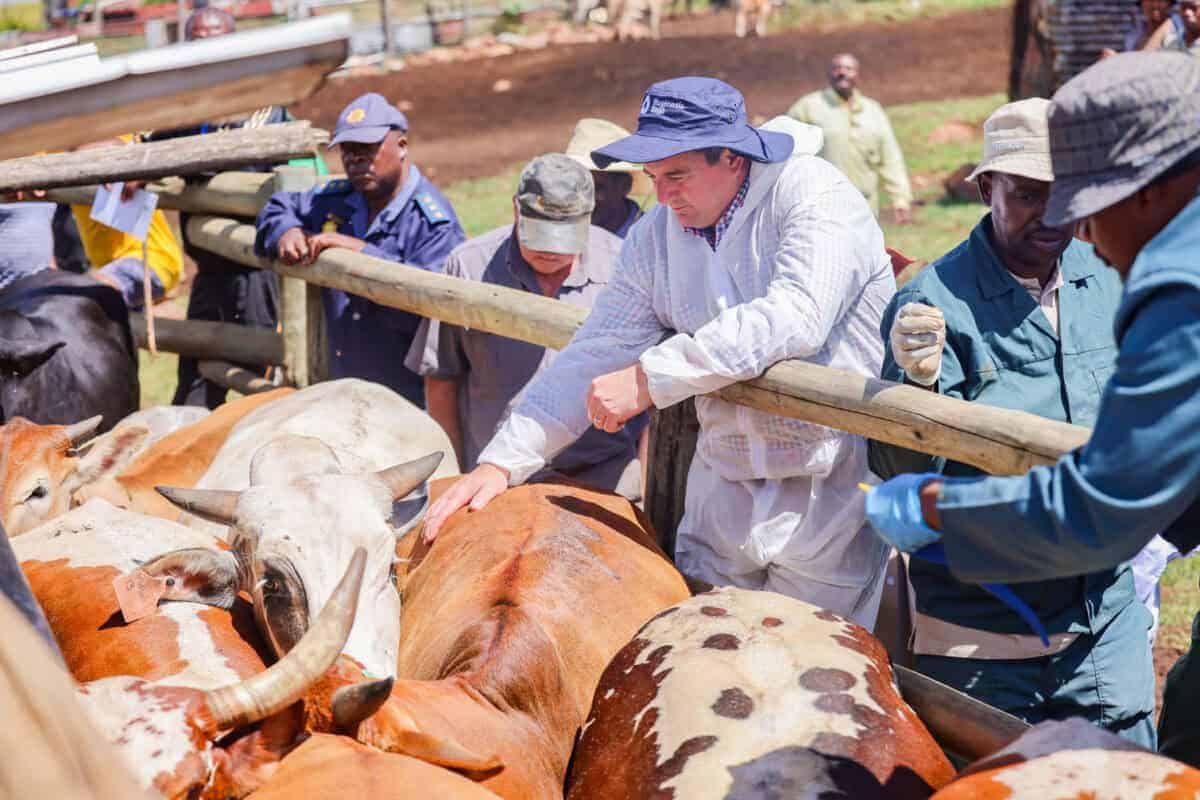
Another batch of two million Dollvet vaccines to fight the ongoing battle against foot-and-mouth disease (FMD) arrived in the country yesterday, Minister of Agriculture John Steenhuisen announced.
The department has reported 37 new cases in the Eastern Cape, 107 in the Free State, 27 in Gauteng, 24 in KwaZulu-Natal, 31 in Mpumalanga, 25 in North West and nine in Limpopo.
Visit umafrika.club for more information.
New vaccine shipment arrives amid reinfections
AfriForum’s environmental affairs manager Lambert de Klerk said the government’s latest plan to tackle FMD creates a monopoly on the procurement and distribution of vaccines.
De Klerk said due to the government’s centralist approach, many cattle now have to be vaccinated anew after they were reinfected due to a delay in the procurement and administration of the second round of vaccinations.
De Klerk added that although the new scheme encourages collaboration between the public and private sectors, it still poses many problems for farmers.
“This means farmers are now expected to pay for a vaccination process that could have taken place earlier and faster if they had been allowed to approach the private sector themselves.
Farmers criticise government response
“The government’s failure to act decisively in this crisis has left the agricultural industry unnecessarily vulnerable. Every week of delay leads to more animals being exposed, creates greater uncertainty and exacerbates economic damage.
“The private sector has the necessary knowledge, networks and logistical capacity to help more quickly, but should have been allowed to do so earlier,” he added.
Free State Freedom Front Plus (FF Plus) provincial leader Jan van Niekerk said the critical shortage of food-and-mouth disease vaccines was putting mounting pressure on farmers, as calving is fast approaching.
“While the crisis worsens, farmers are losing calves and their herds are increasingly weakened. A farmer in the eastern Free State told FF Plus that more than 50% of his calves died within the first two weeks after birth.
Livestock losses spark food inflation fears
“These losses are a severe financial blow for farming operations, resulting in enormous financial and emotional strain on farming families,” Van Niekerk said.
He added if the disaster was not managed more efficiently soon, South Africa will pay a high price in the form of large-scale livestock deaths and rising food inflation.
Southern Africa Agricultural Initiative (Saai) board chair Theo de Jager said the real issue was who ultimately pays for the vaccine.
De Jager said Saai does not deny that certain farmers and agricultural organisations have already received vaccines free of charge, while others have already had to pay for them.
“The real issue is who ultimately pays and whether it is the farmer or the taxpayer,” De Jager said.