Maps, Last Locations & 500 Experts: How A WhatsApp Group Became Nepal Rescuers' Lifeline
· Free Press Journal
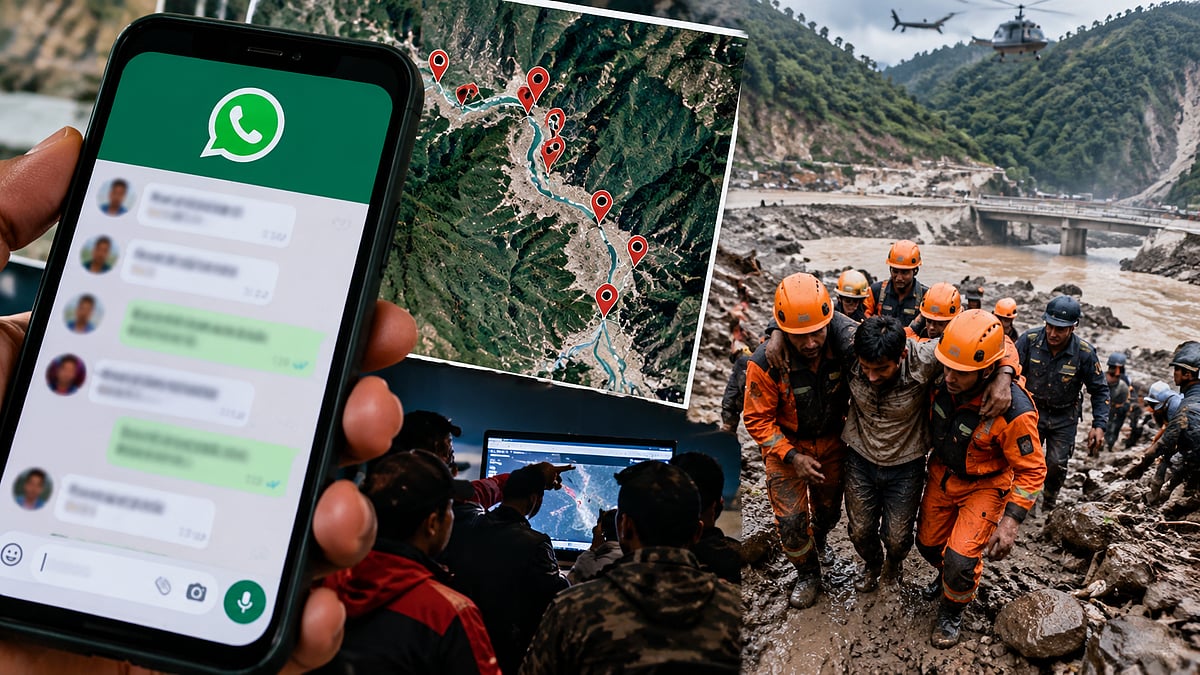
A WhatsApp group of more than 500 engineers, former hydropower employees, government officials and other experts has become a crucial source of information for rescue teams searching tunnels buried under tonnes of mud, rocks and debris after the devastating floods in Nepal's Trishuli valley.
The group, created by engineers shortly before the disaster, is helping rescuers obtain tunnel maps, project drawings and information about the last known locations of missing workers as search operations continue at damaged hydropower facilities, Reuters reports.
Visit biznow.biz for more information.
The Aug 26 disaster sent a massive surge of water, mud and rocks through the valley following a glacial and mountain collapse near the Nepal-China border. At least 1,287 people have died and nearly 4,000 remain missing, according to official records.
As rescuers searched the buried Chilime hydropower plant near the Chinese border last week, a government official sought help from the WhatsApp group.
“Can you send me Chilime layout drawings,” the official wrote.
Within minutes, a member shared drawings of the project's powerhouse along with details of its access tunnels.
Maps and former workers guide rescuers
The WhatsApp group functions as a real-time support network, connecting rescue personnel facing difficulties on the ground with people familiar with the hydropower projects.
Engineers are sharing maps and drawings showing tunnel routes, chambers and connections between different sections of the plants. Former employees are also using their knowledge of the facilities to help rescuers navigate areas transformed by floodwater and debris.
The group is assisting efforts to locate missing workers. Members share names and mobile numbers with officials, who can provide the details to telecommunications authorities. The workers' last recorded phone locations could offer clues about where they were when the disaster struck.
“The flood has altered the terrain around the tunnels and changed their structure, while mud, rocks, soil and other debris had accumulated inside,” Nepal Army spokesperson Raja Ram Basnet said.
“This is not a normal closure of tunnels.”
Delhi Rains: IGI Airport Waterlogged, Flights Delayed As IMD Issues Red Alert; Janmashtami Celebrations Hit | VIDEODozens feared trapped in hydropower facilities
Nepal's Independent Power Producers' Association said at least eight people could be trapped at Chilime. An official of the Nepal Electricity Authority said up to 46 people could be trapped at the Rasuwagadhi hydropower plant farther south.
At Rasuwagadhi, rescue personnel managed to enter about 250 metres into a tunnel before encountering a blockage. Search operations are continuing.
“We are trying to reach there inside again to look for people,” Nepal Electricity Authority board member Amshu Kiran Shahi said.
Shahi said the 46 workers could be trapped inside a chamber with access to food and water.
A Nepal Electricity Authority manager said rescuers had also used the WhatsApp group to seek guidance from former plant workers, who provided useful drawings.
Also Watch:
Two workers rescued after nine days
At the Upper Trishuli 3A hydropower project, rescue teams took nearly six days to reach a buried tunnel. They also pumped oxygen into possible cavities where workers could have been trapped.
Two workers were eventually rescued alive on Friday, nine days after the disaster. They were identified as mechanical foreman Sanjay Sah, 30, and mechanical supervisor Kabir Maharjan, 45.
Sah said he had remained in the control room to help others escape after learning about the disaster.
“I was in the control room, so my responsibility was to save everyone's lives. When there was such a big accident, it was not right for me to run away,” he said.
‘As long as there is breath, there is hope’
Search and rescue operations are continuing in the affected tunnels as authorities try to reach other people who may remain trapped.
“As long as there is breath, there is hope!” Energy Minister Biraj Bhakta Shrestha said in a statement. “Rescue operations are continuing in all the affected tunnels. Let everyone's efforts and prayers continue. We have not lost hope.”