The Indonesia Biodiesel Policy Will Not Likely Hurt India
· Free Press Journal
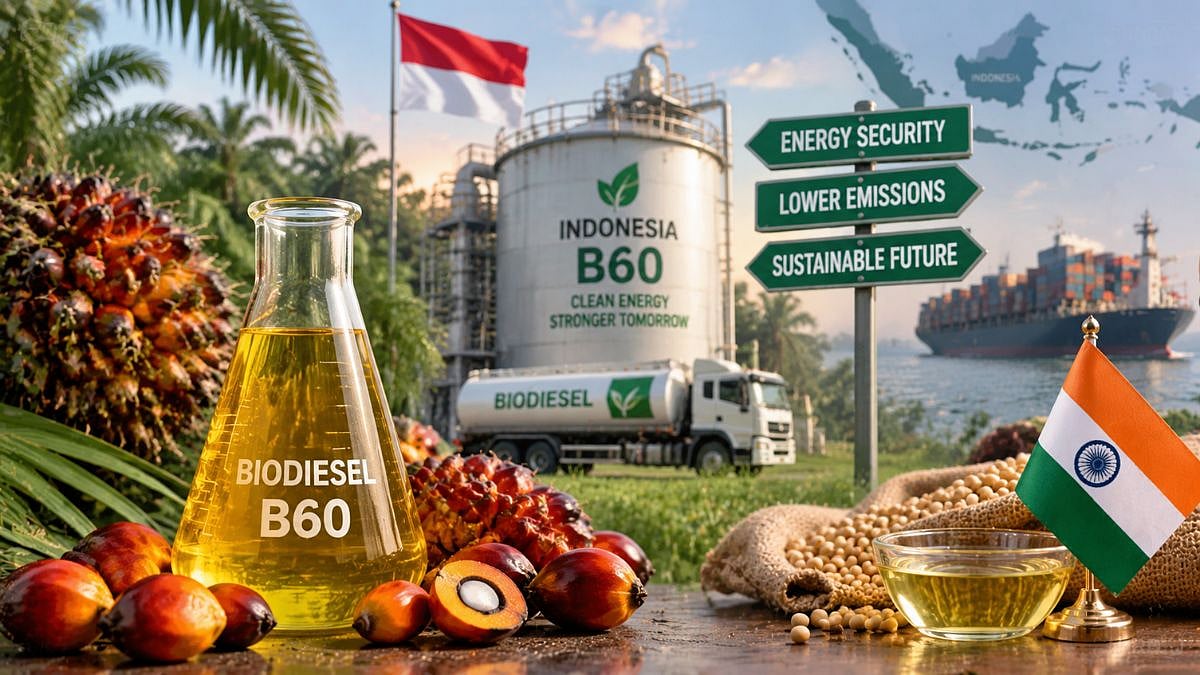
In one of the world’s most aggressive biofuel pushes, Indonesia has announced B60 for implementation in 2027, even before fully achieving the mandatory B50 target rolled out in July 2026.
B50 is conventional mineral diesel blended with 50% vegetable oil-based biodiesel. Indonesia uses palm oil-derived fatty acid methyl ester (FAME) for blending. The plan simply builds on the country’s earlier launch of the B30, B35, and B40 programmes.
Visit somethingsdifferent.biz for more information.
Impact On Global Vegetable Oil Trade
Indonesia’s growing biodiesel programme is part of efforts to reduce carbon emissions, advance national energy security, and eliminate diesel imports. While it is the country’s sovereign right to mandate such blending, this policy may have a ripple effect on the global vegetable trade, in general, and on India, in particular, because of its possible impact on the established supply chain.
Indonesia and Malaysia dominate the global palm oil market. Of the world’s annual production of roughly 81.5 million metric tonnes (MMT) of palm oil, Indonesia accounts for nearly 60% (around 47.5 MMT), followed at a distance by Malaysia (about 19.5 MMT).
More important than production are their exports. Indonesia exports almost 50% (close to 24 MMT) of its production, and Malaysia roughly 80% (16 MMT).
Palm Oil Supply Concerns
A progressive rise in Indonesia’s blending programme is currently attracting heightened global attention for two reasons. First, the ongoing Persian Gulf conflict (USA/Israel/Iran) has caused crude oil prices to spike, which has made domestic blending programmes for large vegetable oil producers fiscally more attractive. And second is the likely adverse effect of the ongoing El Nino weather conditions, particularly in South Asia and Southeast Asia, which threatens to reduce crop production and tighten supplies.
While Indonesia has rolled out B50, it is still assessing crude palm oil (CPO) supply and biodiesel capacity ahead of the planned B60 mandate in 2027. It is critical to consolidate upstream CPO supplies while assessing whether additional oil-palm planting or productivity increases are necessary. Equally important, the policymakers need to assess fatty acid methyl ester (FAME) specifications for B60. All this is going to take time.
India Turns To Alternative Oils
Where does India fit into this essentially Indonesian domestic development? India is the world’s single largest importer of vegetable oils—16-17 MMT a year. Because of its price discount over competing oils like soy oil and sun oil (called soft oil), palm oil used to be India’s preferred oil, enjoying a share of almost 60% of total oil imports.
Palm oil prices have spiked in recent months because of higher blending, risk of lower production, and smaller export availability. Palm oil was the preferred oil because of its price discount over soft oils. As a price-conscious market, India, in recent months, has gradually moved to importing soft oils (soy, sun), which are relatively abundant in availability and at competitive rates.
Between April and July this year, the share of palm oil in the Indian market has actually declined. Of the total 5.3 MMT import, the palm oil share is just about 2.3 MMT, while the share of soft oils has expanded.
Importantly, India’s imports from Indonesia are slowly tapering (320,000 tonnes in July this year vis-à-vis 520,000 tonnes in July 2025). India has started to expand its palm oil imports from origins (producing/exporting countries) like Thailand and Papua New Guinea in recent months, while Argentina and Brazil continue to be large suppliers of soy oil.
Global Vegetable Oil Production
Vegetable oil production around the world has been rising for the past five years. For 2026-27, the production is estimated at 245 MMT, up 6 MMT from 2025-26. So, there’s no shortage, and availability is comfortable. It is just that domestic policies in some origins create minor hiccups in the established supply chain, but the market quickly finds a balance by accessing alternatives.
While India cannot interfere in Indonesia’s domestic biodiesel policy, the Indian government must leverage its ‘import power’. India runs an approximately $13 billion goods trade deficit with Indonesia because of large imports of palm oil, coal, timber, nickel, etc. New Delhi must leverage the import power to ensure Indonesian supplies to India continue uninterrupted. This calls for diplomacy and dialogue.
Crude Oil Prices Key Factor
The Indonesian blending policy draws support from the current high price of crude oil (Brent at $95 a barrel). As and when the military conflict in the Persian Gulf region ends and the Strait of Hormuz opens fully, there is a strong possibility of crude oil rates correcting down sharply. That would make Indonesia’s B50 and B60 plans fiscally unviable. The blending policy may not sustain itself in the medium to long run when crude oil prices move closer to $60 a barrel.
G. Chandrashekhar is a commodity market specialist. Views are personal. Reach him at: [email protected].