Some Parents Are Rejecting Trump’s Free Money
· The Atlantic
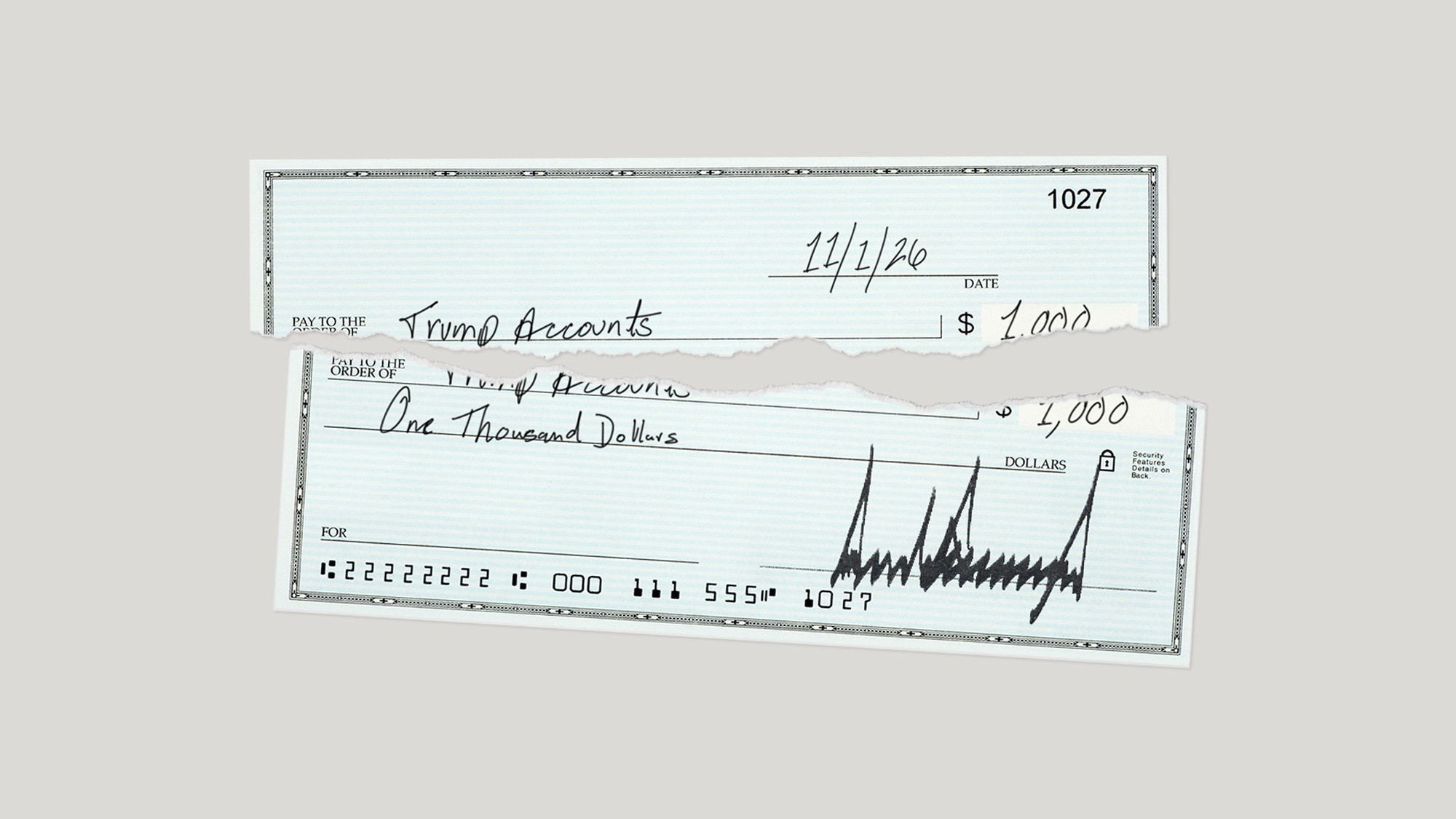
When Eloise, a veteran who lives in Michigan, first heard about Trump Accounts last year, her mind immediately turned to other projects that had borne the name of the businessman turned president: a university, an airline, steaks, casinos. All had gone bust, and several had left creditors or investors holding the bag. Pregnant at the time, she wondered whether opening a Donald Trump–branded investment account would put her first child’s financial future at risk.
Visit moryak.biz for more information.
“Both my husband and I, our first reaction was like, Oh, this is a scam,” Eloise told me. Despite her initial skepticism, she did further research to determine whether to claim the $1,000 seed money the government was offering to most babies born during Trump’s second term. In the end, she decided not to accept it, opting instead to open a more traditional account to put money away for her child. She said she was skeptical that the Trump Account would work as promised and had a “moralistic” opposition to associating her newborn with the president. “Ultimately, it’s like, the man’s a con man,” said Eloise, who asked to be identified only by her middle name owing to fear of reprisals from the commander in chief.
It is rare for people to turn down free money from the government. But that’s what happens when a polarizing president attaches his name to a taxpayer-supported program originally pitched as a vehicle to help America’s children achieve financial security. An investment idea once championed by Democrats as a pathway to stability for millions of minors is now at risk of becoming yet another casualty of the country’s partisan divide. Lawmakers on both sides of the aisle say the program has promise. But its greatest obstacle to achieving widespread acceptance may be its name.
Tax advisers and economists told me that the president’s decision to brand the accounts in his image had become a major impediment for potential beneficiaries. “I have had personal experience where people have said, ‘I just can’t go along with something that has that man’s name on it,’” said Tom O’Saben, the director of tax content and government relations for the National Association of Tax Professionals.
About 7 million children had been signed up for Trump Accounts by late September, before the shift to automatic enrollment. That amounted to about 10 percent of the eligible population. With the pace of enrollment lagging, the Treasury Department late last month made a few regulatory changes aimed at jump-starting things. It shifted from an opt-in system, where signing up required filling out an IRS form, to an automatic system that could enroll more than 60 million eligible minors at once. It also allowed wealthy donors and corporations to contribute individual stocks directly into children’s accounts. The efforts have boosted the program’s reach, but what might have been an uncontroversial policy initiative has still become something of a political loyalty test. In addition to naming the accounts after Trump, lawmakers and regulators have restricted the most generous federal benefits to children born during his second term. They even named the document used to sign up for the account IRS Form 4547, to correspond with the president’s two tenures in office. Treasury Secretary Scott Bessent called it “the most aptly named tax document of all time” during a fawning press conference in which he hailed “the president’s gift to the American people.”
A survey of pregnant women and new moms conducted for the website BabyCenter in March found that scarcely half planned to open a Trump Account, while 27 percent said they did not plan to do so. A fifth of respondents said they did not know what the account was. The numbers were notable in part because all of the women surveyed would be eligible for the $1,000 seed funding. Even with the automatic enrollment, parents and guardians must claim an account for their children to receive the money.
“I don’t trust Trump and his entire Cabinet whatsoever, and I have concerns that this money is some type of scam—like the money might magically disappear one day,” a California mother whose baby is eligible for the seed funding, told me. She asked that her name not be published, because she is locked in a fight with her relatives about Trump Accounts. She worries that the money will be heavily taxed and will somehow eventually become “more of a burden than an asset.”
O’Saben said he regularly encounters such concerns when speaking with clients at his Illinois tax office. He tries to remind them that even though the program bears Trump’s name, the funds were allocated by Congress and are sourced from American taxpayers. He said the pitch from tax advisers to skeptical parents occasionally goes like this: The president’s multiple corporate bankruptcies and history of skipping payments to contractors should not be a factor in assessing the reliability of the new government-backed investment program.
“If anyone has an image of Donald Trump sitting at his desk and writing out checks to these accounts out of his own personal account, that shouldn’t be the perception,” O’Saben said. “Nor is that what’s happening.”
The Trump Accounts, known within the tax code as 530A accounts, were part of the major tax-cut bill Republicans passed last year. They operate as a new kind of individual retirement account, designed to give children an early pathway to financial security as well as a tangible lesson about the benefits of compound interest. Although the government provides the $1,000 seed money to babies born January 1, 2025, to December 31, 2028, any U.S. citizen minor with a valid Social Security number is eligible for an account. Once a child’s parents verify guardianship and claim the account, relatives, employers, and others can contribute funds to it—up to $5,000 a year. Those funds can currently be invested only in a broad index fund featuring U.S. companies. State governments and wealthy donors can also contribute. The money cannot be accessed until the year the child turns 18, at which point it becomes a traditional IRA. The child then assumes control of the account and can withdraw funds to pay for college, a home purchase, or other approved expenses without penalty, or leave the money in the retirement account. The White House Council of Economic Advisers has estimated that a child born in 2026 could have more than $300,000 in the account by age 18 if he or she receives the annual maximum of contributions each year, assuming average historical returns in the stock market.
Democrats have traditionally supported this kind of government-led incentive to give children a head start on building a nest egg. When he ran for president in 2020, Senator Cory Booker of New Jersey made “Baby Bonds” a key part of this economic platform. Under that proposal, the government would grant every child born in the United States a $1,000 savings account at birth and deposit up to $2,000 each year until the child turns 18. Children from low-income families would receive larger contributions. Booker has spoken positively about the Trump Accounts, calling them “children’s investment accounts” in a July press release that said the program had built on his idea. The release noted that the children’s accounts were “also known as Trump Accounts” but otherwise downplayed the president’s involvement. Booker did not respond to my request for comment.
Representative Ayanna Pressley, a Massachusetts Democrat who partnered with Booker to introduce the “Baby Bonds” legislation, has taken a different stance on the Trump-branded version. “Trump has stolen this idea and twisted it into a regressive policy that would exacerbate wealth inequality,” she told me. Because Trump Accounts rely primarily on private largesse rather than government support, she said, the ultimate outcome will “help the rich get richer and leave poor children behind.”
Some Democrats have suggested that the accounts might not survive long enough to provide the expected benefits after Trump leaves office. Representative Bennie Thompson, a Mississippi Democrat, says he would “pass on a Trump account” if given the option, referencing the president’s namesake university that was accused of deceiving thousands of students and failing to deliver promised returns. “Trump University already taught us what happens when his name is on the brochure,” he wrote on X in July. “Does a $25 million settlement ring a bell?” Trump agreed to the settlement a decade ago to resolve lawsuits from students but did not admit wrongdoing.
The White House rejects claims that Trump Accounts will not live up to their promise. “With Trump Accounts, President Trump has secured a signature economic achievement designed to help every American child build savings and support a stronger financial future,” the White House spokesperson Matthew Middleton told me in a statement. “With automatic enrollment now complete and nearly 70 million Trump Accounts created, families have a simpler path to giving their children a jump-start on the American Dream.”
[Read: What the next phase of Trump’s presidency will look like]
During an event in the Oval Office earlier this month to celebrate automatic enrollment, Trump noted that no Democrats had voted for the legislation that created the accounts. He then pivoted to marveling at the fact that some senators had nonetheless offered praise for the program. “I may not like Trump, but I like the Trump Accounts,” the president said, attempting to capture the sentiment among his political opponents. “I have not heard anybody speak badly of it. It’s pretty amazing.” Nearby, a group of middle-school-age children stood holding a sign that read, Thank you for Trump accounts.
In August, California Governor Gavin Newsom called the program “one of the best things” Trump has done as president. He urged constituents not to “fall prey to the politics or the cynicism” and sign up for the accounts regardless of any partisan differences with the president. “It’s not Trump’s money,” he said. “It’s your child’s money.”
Democrats have slammed the tax-cut legislation that created the custodial accounts as a giveaway to the rich at the expense of the working class. Some argue that Trump Accounts do the same. “This $1,000 amounts to a bit of a gimmick,” Darrick Hamilton, an economist and the founding director of the Institute on Race, Power and Political Economy at the New School, told me. Hamilton, an early champion of the “Baby Bonds” program, testified about Trump Accounts at a congressional hearing last month, pointing out that with rising costs, low-income families would be hard-pressed to put any money into the savings accounts after paying their bills.
The Trump administration, meanwhile, is trying to cement the accounts as a major part of the president’s legacy. Frank Bisignano, the Social Security Administration commissioner and IRS chief executive, announced earlier this month that 26 million Trump Accounts had already been funded with $8 billion in investments, nearly double the amount from earlier in October.
The ultimate reach and durability of the program could depend on whether it gains broad acceptance. The California mother said that when family members recently asked for her son’s Social Security number, she thought they needed it for a 529 account set up for the child. She later learned that they had instead used the information to activate the child’s Trump Account and accept the $1,000 seed money. She told me that she considers herself a centrist rather than a Democrat or Republican but had still had opted against claiming the cash herself because “we don’t know what can happen to that money since Trump is so erratic and clearly corrupt.” She has since learned that her in-laws have been depositing monthly dividends from an inheritance into the Trump Account. When she tried to express how uneasy she felt about that and suggested alternative accounts, a minor family drama ensued, proving once again that divisions over Trump can seep into just about any aspect of American life—even free money for a baby.
*Illustration sources: Nora Carol Photography / Getty; Oddphoto / Getty; Yuri Gripas / Abaca / Bloomberg / Getty