Financial Capital Didn’t Make New York City Great
· Jacobin
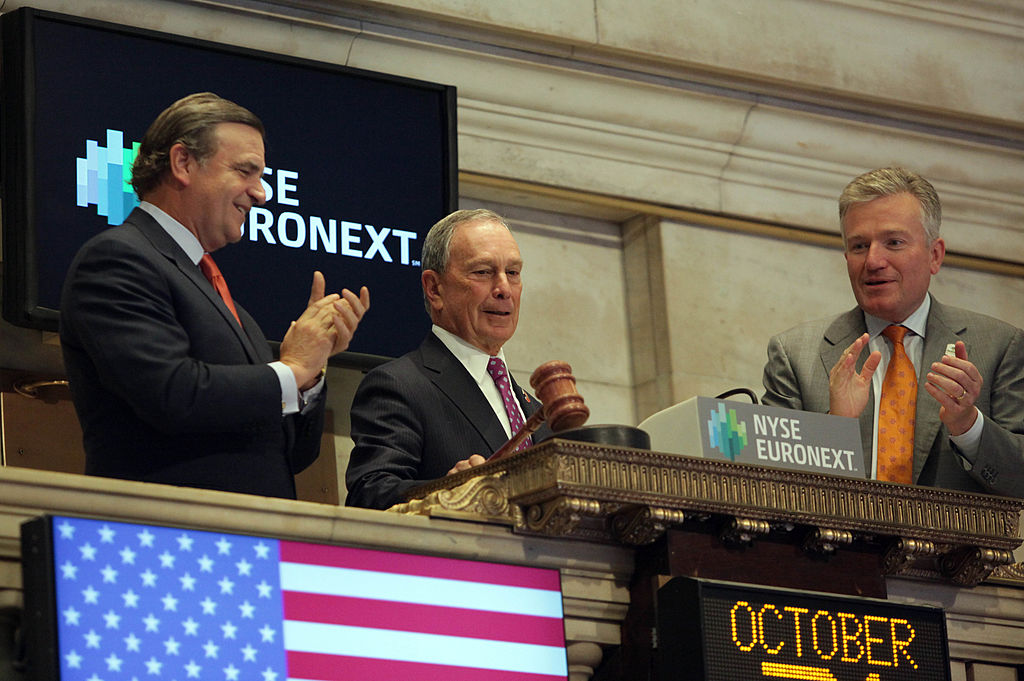
It’s the beginning of the new Ric Burns documentary on New York City, and Adam Gopnik is choking up.He’s talking about the diversity and tolerance that New York, at its best, embodies. He’s talking about the challenges the city has faced over the past fifty years. Above all, he’s talking about how it met those challenges: through its willingness to adapt. Cities are “self-emergent” and “self-sustaining” forms, Gopnik argues, but self-sustaining requires transformation.Happily, New York has been up to the task. “We accept [New York’s] remaking of itself again and again,” he avers, and it is this tradition of demographic and developmental pluralism (“plural pluralisms,” in his inimitable phrasing) that allowed Gotham to transcend its postwar decay and become the beacon of cosmopolitan, progressive liberalism we adore today.It’s a powerful way to open. It’s a message that many other bards of Gotham, from Walt Whitman and Jane Jacobs to Richard Sennett and Teju Cole, have proclaimed. But it’s a message almost entirely undercut by the structure and argument of the documentary that follows.That’s because, in the two latest episodes of Ric Burns’s long-running series New York — whose first five episodes aired in 1999, with two following in 2001 and another installment in 2003 — postwar Gotham is not saved by its “self-emergent” forms or the bottom-up moxie of its existing population but instead by the top-down, outside-in forces of globalization and capitalist development. In 1961, Jane Jacobs wrote that “cities have the capability of providing something for everybody, only because, and only when, they are created by everybody.” The New York City shown here is, for the most part, created by everybody except the ordinary people who live there.To be fair, in an interview about the documentary for the Hollywood Reporter, Burns called “capitalism and democracy and globalization” the “three great pieces of uranium in the city’s engine.” But democracy plays a minor role in this tale. We do not see, as in the series’ original episodes, how unions and tenant organizers struggled to bring Gotham’s economy under greater popular control. Nor do we hear from left-wing scholars like the late Marshall Berman and Mike Wallace who, in previous installments, added a grain of skepticism to the self-congratulating narratives spun by the city’s power brokers. Instead, we hear the story of Gotham’s redemption since the 1970s as the long, lonely struggle to make the city safe for globalized capitalism — accompanied, of course, by sweeping pans and saccharine Irish reels.This is not to say that ordinary New Yorkers are absent from this story. To the contrary: the documentary admirably recounts the patterns of cultural and social transformations that have coursed through the city over the past fifty years. But such pluralism, and the city’s broader liberal political culture, is framed here as dependent on the city’s successful courting of globalized capital since the 1970s — whereas the truth is that globalized capital in its current form now threatens those very virtues that New Yorkers hold dear.Fall and Rise?Every redemption arc requires a fall, and the first episode locates New York City’s fall in its postwar deindustrialization. We hear in admirably clear terms how the loss of manufacturing threatened both the city’s fiscal health and its heavily unionized, heavily working-class population. But the film blames deindustrialization on the impersonal, irresistible forces of “globalization” to which Gotham could either adapt or, in the narrator’s portentous words, “plummet into the widening abyss opening up between the past and the future.”This rhetoric, with its Clintonesque intonations of globalized inevitability, distorts the past. Historian Kenneth Jackson claims in the film that “the city tried to preserve those industrial districts.” Yet Joshua Freeman, a better-informed source on this point, writes in Working-Class New York that the city’s postwar leaders were “sanguine” about the flight of industrial jobs. Well before the mayoralty of Michael Bloomberg and his whiz kids, city leaders and bodies like the Regional Plan Association believed that New York needed to displace manufacturing in favor of globally oriented information and financial service industries.The series itself once said as much: in its earlier episode on the World Trade Center, historian Mike Wallace narrated how “monopoly capitalists” (his words) used public subsidies, zoning reforms, and other tools to “expand the financial core” of downtown at the expense of working-class manufacturing jobs. This process of financialization did not follow the loss of manufacturing; financialization accompanied and accelerated that loss.Why does this matter? The documentary attributes the city’s fiscal crisis of the 1970s to the “inevitable” loss of the city’s manufacturing tax base. But if the city had already begun pivoting toward a financial services economy by that point, then not only was the fiscal crisis exacerbated by local choices: it means also that the city’s financial service economy might have contributed to the crisis.This was precisely what many activists argued at the time. “A city can’t let its skills, manufacturing plants and suppliers’ plants wither away and then not suffer the consequences,” Jane Jacobs complained in 1975. “The notion that the city could live on financial and white-collar services was nonsense.” Corporate expansion, she and others argued, added to the city’s debt and undercut well-paying entry-level jobs, which in turn swelled the city’s costly welfare state. But to give airtime to this argument would interfere with the documentary’s core message: that adapting to globalized finance was necessary if New York was to survive its crisis. There was no alternative.Every adaptation comes with challenges, however. Coming out of the fiscal crisis, New York tells us, Gotham surrendered “fiscal control of its affairs to a small board of bankers and businessmen.” This refreshingly blunt language is paired with equally welcome commentary from political scientist Ester Fuchs, who traces the subsequent decay of public services and rise in crime to the austerity this board unleashed. But, as happens so often in the film, the acknowledgment of pain is accompanied by hedging (“some believed,” “perhaps”) and a countervailing claim: in this case, that the austerity plan devised by the control board, whatever its short-term effects, was a “long-term blueprint for stabilizing the city’s finances.”But the plan, as historians like Kim Phillips-Fein have documented, was far more than a measure of fiscal relief. It was an effort to dismantle a particular model of politics, one in which the economy was embedded in, and subordinate to, democracy. The fiscal crisis was both the beginning and the exemplar of that dismantling. The documentary elides this fact, leaving us to assume that the city’s precrisis “liberal values” survived and even thrived thanks to the wisdom of the bankers’ junta. But the bankers knew better. The “pressing need” regarding the city’s welfare state, a Salomon Brothers investment guide stated in 1975, was not to “finance it” but “to change it.”And that is exactly what they did. Rather than see New York City’s post-1970s story as one of redemption and transcendence, it is equally accurate to see it in terms of profound loss. But that would make for a very different documentary.Ordinary New Yorkers are included in the narrative, to be sure. The film covers the postwar migration of black and Latino New Yorkers, the segregation that confined them, and the cultures they created. We hear about the movements of the 1960s: gay rights, black power, student power, women’s liberation. We hear how immigrants arriving after the Hart-Celler Act of 1965 helped stabilize and revitalize city neighborhoods during the dark days of the 1970s. But here too, the argument about their role is ambivalent. Fuchs may declare that immigrant transformation “at the neighborhood level . . . is as important as bringing in the big fish on the economic side of things.” But this is somewhat offset by another commentator’s claim that “Wall Street single-handedly revived New York.”Beyond Wall Street and immigration, the documentary credits the city’s revival to its leaders’ success in reducing crime in the 1980s and ’90s. This reduction deserves celebration: no one who watches the footage recovered here will forget how violence and the fear of violence degrades the public realm. But the documentary is equally revealing when it links the city’s corporate reconstruction to the development of its local police state. As New York University Professor Mitchell Moss puts it, “what Bloomberg did with finance,” Deputy Commissioner Jack Maple “did . . . with crime.” The film even recounts Maple scribbling his new policing strategy (“rapid deployment, effective tactics, relentless follow-up”) on a cocktail napkin at Elaine’s as if he were founding a new start-up.This convergence of neoliberal technocracy with law-and-order conservatism, arguably the story of America’s post-1970s political economy, is addressed with some vigor by Ric’s brother Ken in his documentary on the Central Park jogger travesty. But while Ric does not shy away from examining police brutality under Rudy Giuliani, the broader tensions between the establishment of a militarized NYPD state-within-a-state and the pluralistic pretensions of liberal Gotham are underexplored.Enter BloombergThe second episode, covering the city since 2001, works hard to convince us that these two decades were the “most challenging . . . in the city’s entire history.” Terrorism, climate change, and a global pandemic called into question not only New York’s future, we are told, but “the future of cities” itself. And the documentary would also have us believe the city survived thanks less to the “thousand small sanities” of Gopnik’s liberal imagination than to the very large sanity of one man: Michael Bloomberg, mayor from 2002 to 2013 and, in one commentator’s words, “the greatest mayor in New York City history.” For more than an hour the film lavishes attention on the three-termer’s “scientific” approach to counterterrorism, the rebuilding of Ground Zero, the residential remaking of the waterfront, and other accomplishments.Having lived in New York through those years, I can vouch for Bloomberg’s administrative efficacy. I, too, appreciate the High Line and The Gates, the bike lanes and 311. But it would have been nice, amid the interviews with admiring aides and acolytes, to hear from a few of the activists and advocates who disagreed with him. What would tenant organizers say to the claim that the city’s rezonings were “gradual” and touched only vacant manufacturing land? What would Asad Dandia, the borough historian of Brooklyn who was himself surveilled by an NYPD informant as a college student, say about the department’s claim to have “foiled sixteen terrorist attacks” thanks to their derring-do?Above all, what would Bloomberg’s critics say about his effort to rebrand New York as a “luxury city”? We do hear about the city’s “astounding” inequality during and after his tenure, about its link to Wall Street’s growth, even about its “spiritually corrupting” effects. But we do not hear about these outcomes as deliberate local policy choices. Indeed, the film makes the conventional Manhattan Institute claim that the city offers the poor more opportunity than elsewhere in America “in part, at least,” because of its inequality.Now, New York is certainly a bright spot in the US economy. But to read that as a verdict on the city’s capacity for innovation, or on the health of cities generally, is backward. New York long ago chose the route of becoming the nation’s rentier, the Empire City to which the periphery paid tribute through the interest, dividends, and land rents directed toward Gotham’s financial sector. And the divergent fortunes of New York and a handful of metros on one side, and struggling cities and “left behind” regions on the other, do not herald “the future of cities.” They suggest a future where urbanity has become a luxury in distinction from and at the expense of formerly vibrant urban centers.But this is not how the documentary understands urban crises. Thus, Zohran Mamdani’s election is framed as a referendum on Eric Adams’s “sell-out” to Donald Trump and Immigration and Customs Enforcement, a matter of attitudes toward immigration more than affordability. As the narrator recounts, “It was perhaps for that reason [the sell-out], in part, that in the fall of 2025 . . . New Yorkers went to the polls and, for the first time in the city’s history, sent a Muslim mayor to city hall, perhaps wishing to show that even in the hardest of times, the city’s commitment to providing a home for all the peoples of the world remained unwavering.”Zohran is indeed striving to provide a home for all the peoples of the world. But he also wants to help preserve New York as a home for all New Yorkers: to preserve the city as a place of diversity where ordinary working-class people can afford to live. The change-besotted documentary, of course, makes preservation and pluralism seem like contradictions in terms. But Mamdani, and New York voters, seem to know better.Which Way, New York?In the series’ earlier episode on the World Trade Center, historian Niall Ferguson offered an interesting reading of the September 11 attacks. Where others framed them purely as an assault on liberal democracy (“they hate us for our freedom”), Ferguson argued that the towers’ advocates “thought they could have the benefits of a globalized economy and none of the costs. They thought you could globalize economics but not politics, not violence.” And he was right.Something similar, I suspect, is true today. The would-be defenders of New York point to its diversity and tolerance, its cultural breadth and civic spirit, as the great fruits of globalized capitalism. Those who resent New York from the benighted “left behind” regions, unable to pivot as Gotham did, simply resent our success and way of life. They hate us for our freedom.But just as globalized capitalism helped push the city into fiscal crisis, it has played no small part in creating the forces now in revolt against it and the liberalism it represents. Its financial sector helped destabilize and drain the economic life from entire regions in the United States; it worked to enrich Trump; above all, the affordability crisis it has driven and benefits from is threatening the very social, cultural, and intellectual diversity that once made New York great.Indeed, we might see the overconcentration of financialized economic activity in New York and the decline of opportunity in many other places as two faces of a single crisis of liberal pluralism. Some will say, as Ric Burns’s documentary does over and over, that we’ve seen all this before: that globalization and capitalism are constants in Gotham’s history. Yet there are alternatives to the path of economic development the city has chosen. And if plutocratic conditions within New York cannot preserve the values of liberalism and pluralism we most value about it, perhaps their preservation will have to come from outside it through an evening out of our nation’s economic geography, as advocated by Lewis Mumford; or as another illustrious thinker once put it, through “the abolition of the antithesis between town and country.”This article originally appeared in Jacobin, a democratic socialist magazine publishing long-form essays and analysis on politics, economics, and culture. Subscribe to the print edition for $20 a year.
Visit biznow.biz for more information.