The Variety Bag Has Ruined Halloween
· The Atlantic
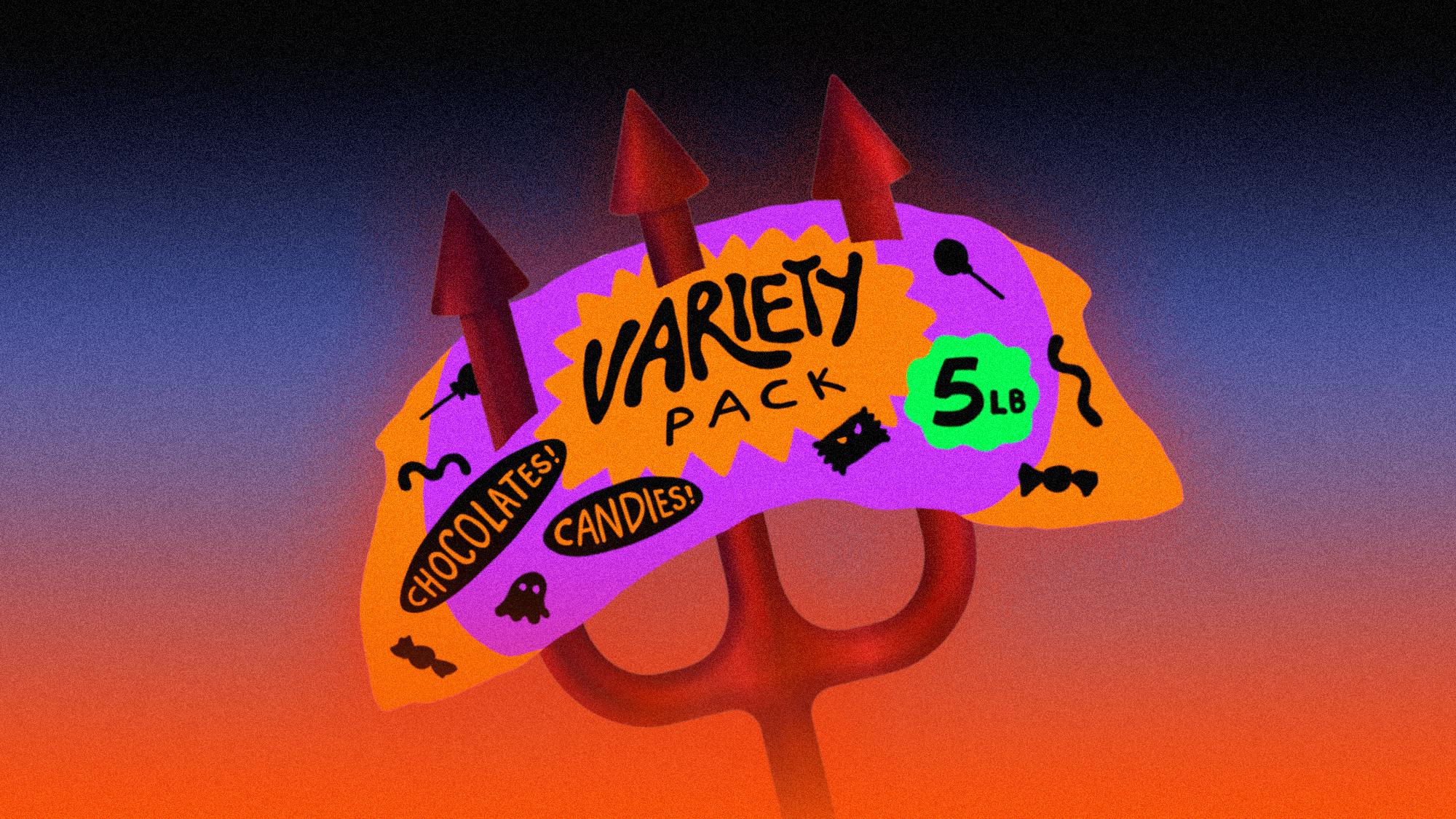
All Halloween candy is the same now. Nothing stands out, apart from the quantity of candy dumped out on the floor back home. Every house seems to buy a variety bag of seemingly random candy, and consequently every stop metes out a little more of the same treats as the previous one did or the next one will. A harvesttime holiday that evolved from traditional reflections on death is now merely another household chore to carry out on the way to mortal life’s certain end.
Visit moryak.biz for more information.
In my memory, the trick-or-treating procedure used to go down like this: An older lady or stern man made some idle chatter about costumes and then dispensed one or three candies into my bag directly from their basket. The candy provided was particular and intentional: You got a Hershey’s Special Dark mini and a wee Mr. Goodbar, perhaps, or a few Smarties cylinders, or, alas, a handful of Bit-O-Honeys. Children identified houses by what they dispensed: Don’t miss the quiet bungalow that yielded a surprising payload of Rolos, but don’t bother with the big, well-manicured property on the corner where only Brach’s Jelly Nougats are on offer. Such impressions sometimes became sufficiently evocative—the Rolo house—to characterize a street’s residences at other times of the year.
Not anymore. Kids’ hauls at each house are bigger than ever, but also more similar. Back when the seasonal candy was more diverse, it communicated something about the trick-or-treatee’s aesthetics and even their values. Hershey’s bars or Tootsie Roll Pops suggested traditionalism. So did shortened tubes of Necco wafers (in an esoteric way), or cellophane-wrapped, spherical hard candies (in an antiquated one). Baby Ruth or Butterfinger insinuated indulgence, moderated—Reese’s Peanut Butter Cups meant it immoderately. A miniature box of Nerds or a Blow Pop would have come across as progressive, at least during my youth. A packet of Pop Rocks would have felt positively punk rock.
[Read: A Halloween myth that can finally die]
Kids might share intelligence about the house offering Boston Baked Beans (actually good, but considered undesirable by peers) or Red Hots (symbolically righteous but actually underwhelming). A handful of Sixlets—previously unheard-of—implied a larger universe than a pre-internet child might have imagined possible. Some houses matched a kid’s unexplained taste in quiet, affirming ways. For me, Spree was a peculiar pleasure, and Chuckles jelly candies, and 3 Musketeers bars, with their gentle, whipped nougat. Some doors suggested eccentricity or extremism. Even after the razor-blade panic and Tylenol scare, some homes still gave out plastic-wrapped, homemade popcorn balls, an earnest but unwelcome attempt to retain the disappearing past. Others came off as unhinged. Dentists sometimes offered pencils or crayons instead of candy, for obvious reasons. My parents insisted on throwing handfuls of nickels into awaiting pillowcases, a practice that caused me enormous shame despite the fact that some neighborhood children appreciated it.
This opportunity to express distinctiveness at the Halloween stoop, and to receive it, has become much harder. In part, that’s because trick-or-treating has declined in general. The reasons are many: The total number of trick-or-treat-age children has decreased by a quarter since 1970; community trunk-or-treats or school events in the days leading up to Halloween started supplanting the door-to-door tradition; parents and kids decamp for “better” neighborhoods, whose betterness begets ever-increasing Hallows’ Eve inequity. Neighborhoods are less connected in general, and some municipalities enforce nanny-state ordinances around the practice.
But the candy has also changed. Like soda or fast food, candy was largely regional until well beyond the middle of the century. The Oh Henry! Bar, for example, was invented around 1920, by one account named after an exclamation a clerk at George Williamson’s Chicago candy store uttered to a frequent patron named Henry. But consolidation came to the candy industry. Hershey bought Reese’s in 1963, then Almond Joy and others. Mars ended up with M&M’s, Snickers, Twix, Milky Way, and many more. These days, those two companies account for around two thirds of the U.S. chocolate market. Along the way, products such as Oh Henry! fell by the wayside. That bar changed hands four times from 1965 to 2019, when it was taken off the market in the United States. Now no American child needs to ask a parent what the heck an Oh Henry! bar is, because they definitely won’t receive one in their plastic jack-o’-lantern.
October retail flyers of the past reveal much greater choices. In 1970 and 1985, Kmart advertised bags of Milk Duds, Whoppers, Dots, Sugar Daddy, Good & Plenty, and Junior Mints, among others. A 1988 coupon ad from the Leaf candy company (once the fourth-largest North American confectioner, most of whose brands were bought by Hershey in 1996) sold packs of Chuckles (my heart!), Slo Poke, Good & Fruity, Zagnut, and Rain-Blo bubble gum. Even products from companies that have survived brand acquisitions used to be more varied: Hershey’s Kisses were a common trick-or-treat offering, for example, and Tootsie Roll Industries sold bags of Tootsie Roll Pops. Now, at my local supermarket, Haribo Goldbears represent the sole independent exception.
More often today, Halloween candy comes in those nefarious variety bags. This practice isn’t entirely new; a variety of Hershey’s minis—Milk Chocolate, Special Dark, Krackel, and Mr. Goodbar—were a tradition of office reception desks as much as dark neighborhoods on October 31. Now assortments are the norm. This year, I found several nearly identical Hershey’s bundles at my local Dierbergs, each containing its namesake chocolate bars along with Reese’s cups, KitKat, Almond Joy—and then an oddball from the farm leagues, such as Milk Duds, Hershey’s Cookies ‘n’ Creme, or Rolo. Reese’s Pieces, a candy that E.T. once made unique, were available only in a package with KitKat, Reese’s cups, and two types of Jolly Rancher gummies. Mars has its own versions with Snickers, Milky Way, and two kinds of M&Ms.
The industrial consolidation has turned Halloween candy into an anonymous murk. That mix probably pleases every trick-or-treater a little, but it also risks making every house’s offering essentially identical.
Across the street at Costco, the situation was even more dire. Enormous bags of Kirkland Signature Favorites were on offer, each containing a fusion of the other fusions: Mars and Hershey and Haribo candies all mixed together. The collection was so haphazard and homogeneous, Costco felt obliged to emblazon a large disclaimer on the packaging’s front: “This bag may not include all varieties listed.” A handful of candy an adult might dispense from the Costco superset is identical to one taken from a child’s overall plunder.
The point is clear: Nobody should care what kind of treats they buy or receive anymore. All Halloween candy is what economists call a perfect substitute for other candy. Throw a bag in the cart and get the candy-having done with—then hold out the basket of whatever came in the bag and let the kiddos get the candy-taking done with too.
Perhaps the indifference counts as apathy rather than disdain. Candy might just not be as important as it used to be. Changing tastes have led to an ever-widening set of options for, and conceptions of, treats: sweet beverages, frozen desserts, snack products, yogurt-alikes, breakfast cereals and bars, cookies and cakes. Sweet coffeehouse beverages, limited-edition cookies and snacks, and endless brand collaborations have also created more options and greater surface area for candy alternatives. Competition, combined with a long moral and dental disapproval of sweets, has contracted candy’s charm.
[Read: The costume I can’t persuade my husband to throw away]
Almost a decade ago, in one of the most unpopular opinions I have ever published, I wrote that full-size candy bars have no place on Halloween. My argument was that big candy bars counted as normal ones, and that Halloween (understood as a holiday of sweets rather than death) was best experienced by amassing and experiencing the treats in a novel and different form. But even all those years ago, I failed to understand how far candy bars had fallen. Full-size ones had already become unfamiliar, such that discovering them on Halloween counted as the novelty that fun-size diversity had represented. Once, a neighborhood’s children could steer one another toward the house with the Reese’s Pieces, or away from the one with the Mounds (sorry, Mounds). But now the only possible take on candy is that yours is better because it is bigger, and you are therefore better because you are more affluent: That house has full-size bars!
So this year, amid the bulging plastic duffels of candy at the Costco, I found myself reconsidering the wickedness of big bars. My wife and I searched our memories of youth, ever more distant, for precedents. Big bars were rarer then, but not unheard-of. When available, we recalled, they did not typically suggest wealth but modesty matched to tribute: mostly big, plain Hershey’s bars, offered by older couples for whom the candy bore particular meaning, because Hershey had transformed chocolate from an unattainable luxury into a cheap, accessible staple.
Then, just beside the anonymous mixed bag, boxes of full-size bars stacked on pallets met my eye. Costco was selling 30 to a box, with Hershey’s, Hershey’s With Almond, the Reese’s Peanut Butter Cup two pack, and the four-fingered KitKat. Even the full-size bars had been relegated to an assortment.