Olympic Gold Medallist Abhinav Bindra Questions Under-15 Talent Hunt, Calls For Focus On Late Bloomers
· Free Press Journal
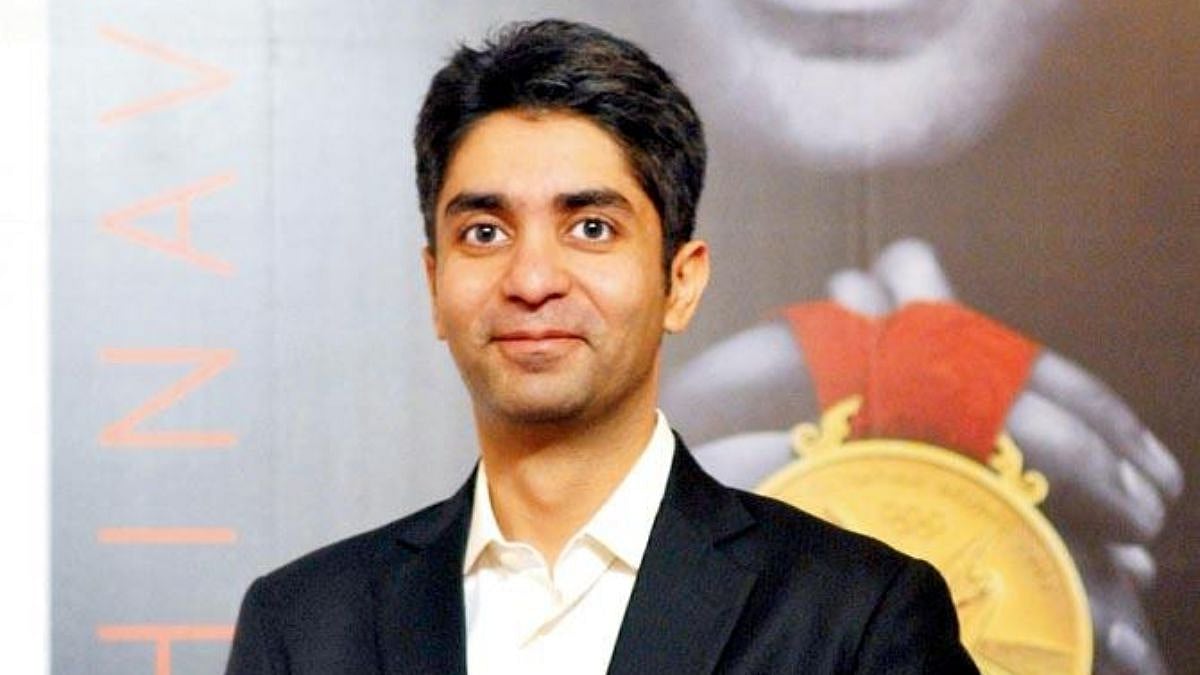
New Delhi: Indian shooting great Abhinav Bindra cannot wait to see how the country's ambitious Talent Identification Scheme for children under 15 pans out, hopeful that the system will have the "patience and wisdom" to nurture youngsters beyond their immediate results.
As part of the Khelo India Scheme for the period 2026-27 to 2030-31, a four-stage Talent Identification and Development Module has been formulated by the Sports Ministry to create a pool of young athletes who can be shaped into medal contenders for the 2036 Olympic Games that India is bidding to host in Ahmedabad.
Visit newsbetting.cv for more information.
It is really encouraging to see India preparing to take a more systematic approach to grassroots talent identification. This is a welcome step, and a wonderful opportunity to build something meaningful for the future of Indian sport.
— Abhinav A. Bindra OLY (@Abhinav_Bindra) October 30, 2026
As we begin this journey, I feel there are…
Prime Minister Narendra Modi had announced the initiative during his Independence Day speech earlier this year.
Bindra, who became India's first individual Olympic gold medallist in the 2008 Beijing Games, said that while it is encouraging to see a plan like this take shape but some fundamental questions should be addressed.
IND vs NZ 4th T20I: Glenn Phillips Turns Beast Mode! New Zealand Star Tears Into Indian Bowlers With Explosive 107-Run Knock"Because behind every test, every assessment and every number is a young child with a dream," the former rifle shooter posted on 'X'.
"A child who is not the best at 14 may still have everything it takes to become extraordinary at 24. As India begins this important journey, I hope we build a system that not only recognises talent, but has the patience to nurture it, the wisdom to look beyond immediate results, and the compassion to ensure that a child's dream is never defined by a single day of testing," he said.
The four-stage module laid down by the Ministry covers the Foundation Level, Grassroots Level, Intermediate Level, and finally the Elite Level, which is already backed by the government's multi-crore Target Olympic Podium Scheme (TOPS).
Foundation level focusses on beginners and young children. Their training is undertaken to introduce basic skills, physical fitness, and an interest in sports through a tie-up with schools across the country in collaboration with the Ministry of Education.
Mayank Yadav's 143 KPH Yorker Stuns Daryl Mitchell After 20-Run Onslaught During IND vs NZ 4th T20 Match | VideoGrassroots level takes talent identified through schools, and school leagues to early-stage coaching. Training centres include Khelo India Utkrishta Vidyalayas, Khelo India Feeder Schools and Khelo India Centres.
Then comes the Intermediate Stage where athletes are categorised as Emerging Khelo India Athletes (E-KIA) or Khelo India Athletes (KIA) based on the age-appropriate protocols and benchmarks.
Training is undertaken at the facilities of Sports Authority of India Training Centres (STC), SAI National Centre of Excellence (NCoE), Khelo India Accredited Academy (KIAA), Khelo India Centre of Excellence (Including Universities), Youth Sports Companies (in collaboration with Armed Forces) and other suitable academies.
Bindra said the approach to identifying talent should be driven by a firm belief in late-bloomers as well and for that, a deeper understanding of the participating children's socio-economic background would be crucial.
IND vs PAK: Abbas Afridi's Explosive 35-Off-8 Blitz Powers Pakistan To Stunning Win Over India In Hong Kong Sixes 2026"Are we measuring only what a child can do today, or also their ability to learn, adapt and improve? How do we account for differences in nutrition, family circumstances and access to coaching?
"A child who has never received structured training may not perform as well as one who has had years of support. But does that necessarily tell us who has greater potential?" he asked.
"There is also something important to consider about opportunity. If a child develops early, performs well and is selected, that child naturally receives better coaching and greater exposure," he pointed out.
Bindra said the scheme needs to make sure that one assessment doesn't close a door that "might have opened a few years later".
IND vs PAK: Krunal Pandya Avoids Handshake With Pakistan Captain Abbas Afridi At Toss In Hong Kong Sixes 2026 | Video"How do we keep children engaged, motivated and believing in themselves when their development takes a little longer? And how do we recognise the different needs of girls and boys, athletes with disabilities, and children pursuing different sports?
"Perhaps we should also follow these young athletes over the years, learning which early qualities really translate into senior excellence, why some progress while others leave sport, and how we can keep improving the decisions we make," he suggested.
Bindra said if addressed sincerely, the questions raised by him would help build a system with a "real understanding of the children it is meant to serve."
(Except for the headline, this article has not been edited by FPJ's editorial team and is auto-generated from an agency feed.)