Almost here: GWM Haval Jolion Max launch date confirmed
· Citizen
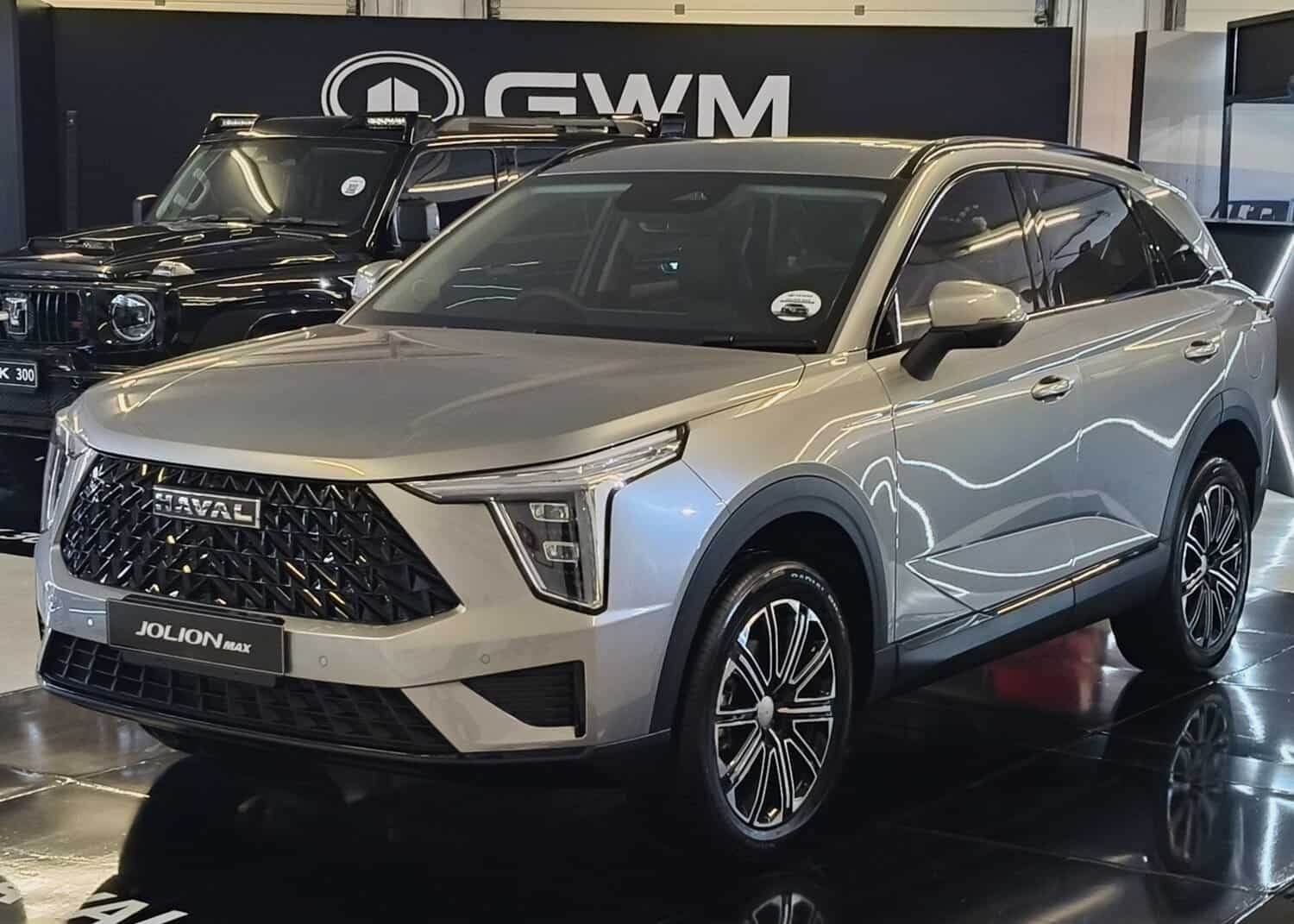
One of the number of new products shown at the Kyalami Festival of Motoring in August, Great Wall Motors (GWM) South Africa has confirmed the launch date for the new Haval Jolion Max.
Visit saltysenoritaaz.org for more information.
What is it?
Announced at the time of its reveal as debuting in the final quarter of 2026, the Jolion Max will take up station between the Jolion Pro and H6, with a choice of either petrol, self-charging HEV hybrid or plug-in hybrid powertrain.
Known as the H6L in China, or Xiaolong Max in the case of the plug-in hybrid models, the coupe-styled Jolion Max has been on-sale in its home market since 2023 and has the following dimensions:
- Length: 4 800 mm;
- Wheelbase: 2 810 mm;
- Height: 1 730 mm;
- Width: 1 895 mm
Comparatively, the Xiaolong Max has the same wheelbase and width, but measures 20 mm shorter while also being five millimetres lower.
Up front
PetrolAs shown at Kyalami, South African model will have the frontal design from when the H6L debuted instead of receiving the reworked facia introduced at its and the Xiaolong Max’s recent facelift in 2025.
Up front, the Jolion Max is expected to carryover the 1.5-litre turbo-petrol engine from the Jolion Pro, which means outputs of 105kW/210Nm fed to the front wheels through a seven-speed dual-clutch gearbox.
A further option could be the more powerful unit from the Jolion Pro S that develops 130kW/270Nm, while the Chinese-market 2.0-litre turbo-petrol outputting 175kW/385Nm is an unconfirmed third combustion-powered option.
HEVFor the HEV, the Max will most likely, again, use the same setup as the Jolion Pro HEV, which combined the 1.5-litre turbo-petrol with an electric motor and battery pack for a total output of 140kW/375Nm.
Unlike the petrol, drive goes to the front wheels through a single-speed Dedicated Hybrid Transmission (DHT).
PHEVIn China, the Xiaolong Max has a choice of two plug-in hybrid options, all under the Hi4 banner, and therefore with two electric motors and all-wheel drive as standard.
Starting off, the base option loses the turbocharger from the 1.5-litre engine, which sees power drop to 85kW/140Nm.
Combined, however, with the 18.7-kWh battery pack powering the pair of electric motors, the total system output comes to 238kW/595Nm.
The result is 0-100 km/h in 6.8 seconds, a top speed of 180 km/h and a claimed WLTP electric-only range of 85 km. DC charging support of 43 kW will require a waiting time of 47 minutes from 30-80%.
Completing the range, the Long Range has the same outputs as the “standard range”, but benefits from a larger 27.5-kWh battery.
This translates to the same performance figures, but a WLTP all-electric range of 126 km and DC charging support up to 52 kW, will need 33 minutes to charge from 30-80%.
Price?
Likely to have a starting sticker around the R500 000, final price and specification will officially be revealed the 17 November launch