How Chuck Schumer Got the Lousiest Job in Washington
· The Atlantic
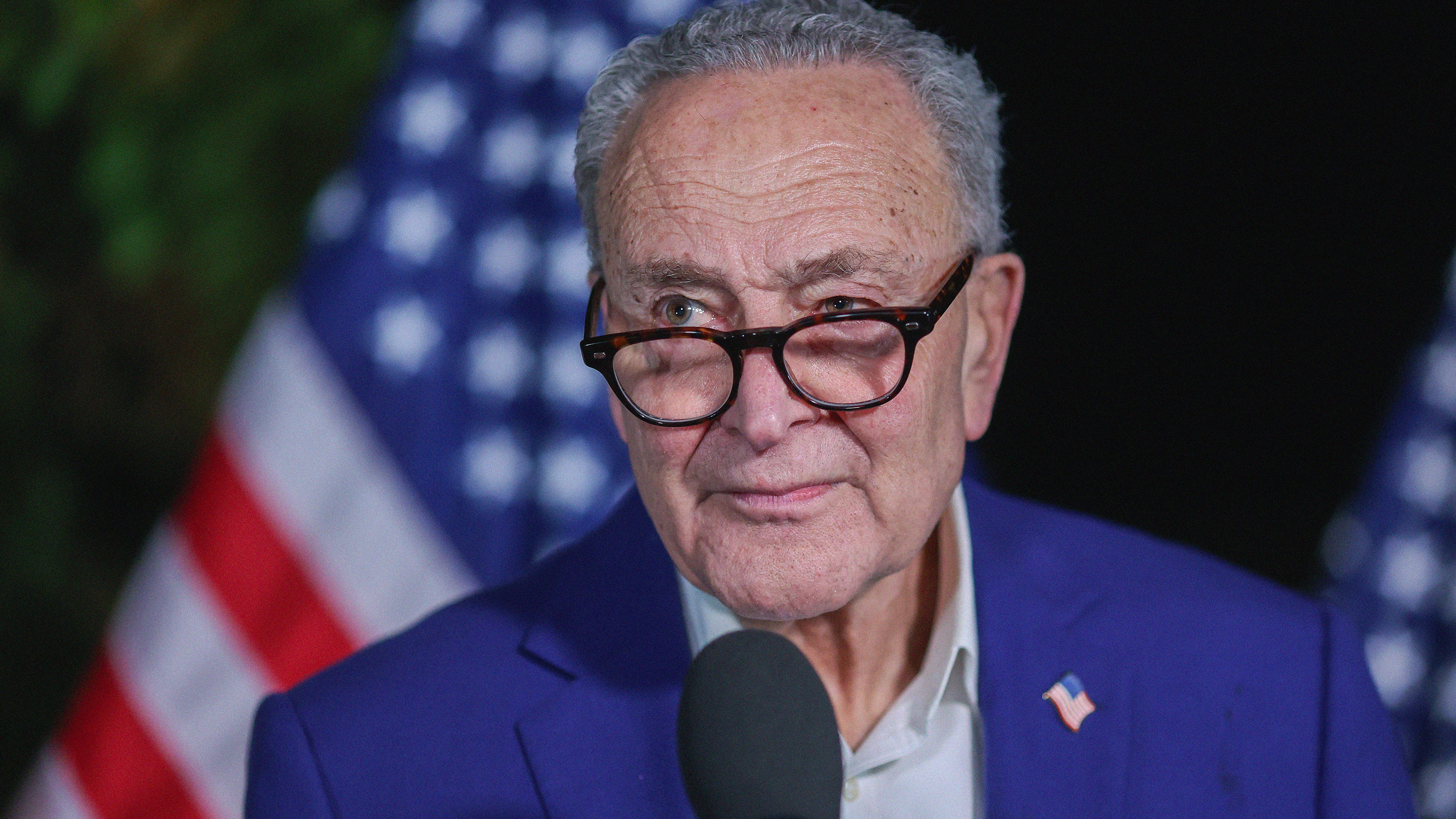
Over the past two grim years, Chuck Schumer emerged as the symbol of everything that Democrats despised about themselves: the last aging Boomer who wouldn’t let go, the centrist without the steel to brawl with President Trump, a messenger forever mangling the message. Taunting the Senate minority leader became the easiest way for Democratic candidates to preen for the base and signal independence. “If you’re Chuck Schumer, I’m pretty damn dangerous,” Abdul El-Sayed jeered during the Michigan primary.
Visit biznow.biz for more information.
When I spoke with Schumer on the phone, the day after the Democrats delivered Trump’s party a once-in-a-generation pummeling, he wanted me to know that “Abdul and I get along.” Ever since El-Sayed clinched the nomination, the two have talked two or three times a week, and the super PAC aligned with Schumer spent tens of millions in Michigan. I tried to press Schumer on their differences over Israel, but he brushed me aside. “Beating Trump has always been my north star. Taking the Senate has been my north star, and I’ve been true to it. And if I get some criticism, so be it.”
Whatever abuse Schumer absorbed along the way, he looks to be the heavy favorite to return to his old job as majority leader. His critics are a small faction of a caucus that Tuesday night’s victory just made bigger; he can afford a few protest votes. And even though he backed a few duds—Haley Stevens in Michigan and Janet Mills in Maine—he recruited many of the candidates who flipped seats. It’s hard to argue that he was holding back the landslide rather than one of its architects.
[Listen: Did Democrats win—or did Trump lose?]
Schumer, of course, isn’t reticent about describing that role. He told me about how he first came to know Scott Colom, who looks likely to narrowly oust Senator Cindy Hyde-Smith of Mississippi. In 2022, then-President Biden nominated Colom, a district attorney in northern Mississippi, for a federal judgeship. Hyde-Smith killed Colom’s chances by refusing to return her blue slip, invoking the archaic courtesy that lets a home-state senator veto a judicial nominee. But Schumer had taken a liking to Colom. “I thought this would be a great candidate in Mississippi,” he told me. In search of a challenger to face Hyde-Smith, Schumer invited Colom and his father to lunch at his apartment in Brooklyn and began pitching.
Flipping Mississippi, he boasted, was an old fixation—his staff doesn’t like when he calls it his “white whale.” It’s the state with the largest share of Black residents in the country; Democrats haven’t won a Senate race there in more than four decades. When Schumer studied the map, he saw that the opportunity wasn’t just with Black voters. “The white population keeps getting better in Mississippi. More, you know, less-hard-core Republican.” He credits this development to John Stennis, of all people. Stennis was a die-hard segregationist, the last Democrat to represent Mississippi in the Senate. As chairman of the Armed Services Committee, Stennis turned Jackson, the state capital, into a defense hub. “In the early days, the defense workers were Republican; they were mainly blue-collar. Now they’re mainly Democratic because they’re techies, like a little Atlanta,” Schumer said.
Recruiting candidates to run in states that Democrats keep losing is a grind. Schumer flew to Columbus, Ohio, three times to entice former Senator Sherrod Brown into the special election for Vice President Vance’s old seat, even though winning it would mean running again in two years, in a presidential cycle, when the electorate is likely to be less favorable. By the third meeting, Brown and his wife, Connie Schultz, were wavering. Schumer told Brown that he would have a lovely retirement, but warned: “If you don’t run and we lose the Senate by one seat, you’re not going to enjoy your retirement that much.” The next day, Brown and Schultz called to tell him that the argument had worked.
One of the beefs with the Democratic leaders of Schumer’s generation, a fair one, is that their obsession with preserving institutions has kept them mired in stuffy arguments that never gained adequate traction. They harped on Trump’s threat to democracy and they dwelled on Russian influence and January 6, while failing to generate a compelling answer to the pressing anxieties of everyday life. That changed over the past two years, when House Minority Leader Hakeem Jeffries and Schumer recast their case against Trump, focusing on his self-enrichment at the public’s expense. They strained to link nearly everything he did to the cost of living. Tariffs meant higher prices; the One Big Beautiful Bill Act meant higher health-care premiums; gutting the Inflation Reduction Act meant higher electric bills; the Iran war meant more expensive gas and diesel. The two themes converged in what Schumer considers the Democrats’ biggest victory of the past two years, helping block Trump’s $1.8 billion “Anti-Weaponization Fund,” which the president could have paid out however he liked.
[Adam Serwer: Even where MAGA won, MAGA lost]
For his opening salvo as majority leader, Schumer has prepared roughly 15 bills that would, in theory, bring down costs and rein in corruption. None are sweeping reforms. They would lower the cost of insulin, for instance, and ban stock trading by members of Congress and the president. (Under the Constitution, bills repealing tariffs or restoring Affordable Care Act tax credits must originate in the House.) The point is a barrage of reasonable legislation that forces Republicans either to oppose popular measures or to make Trump veto them. The strategy rests on the premise that the country rejected Trump rather than embraced Democrats, and that the party’s most urgent task is earning back the public’s trust.
The truth is that Senate majority leader, as John Thune would likely attest, has become one of the lousiest jobs in Washington. Schumer is tolerated by his flock, sometimes barely. That Democrats who mainline cable news or pine for a feistier progressivism can’t stand him makes him a convenient villain, a vessel to blame for unpalatable political choices. His agenda will likely feel annoyingly small-bore, when the case for sweeping political reform seems screamingly urgent.
But Schumer is nothing if not a politician who relentlessly flogs the formula once he believes that he has cracked it. He told me that his task is nothing less than “to remake the map in a generational way,” to cling hard to the fact that Texas, Ohio, and perhaps even Mississippi are now in his party’s grasp, the potential basis for a lasting majority. That’s not a lyrical vision of politics, but it is a form of idealism.