Impeachment Articles Highlight Pete Hegseth's 'Extrajudicial Killings' and His Assault on Free Speech
· Reason
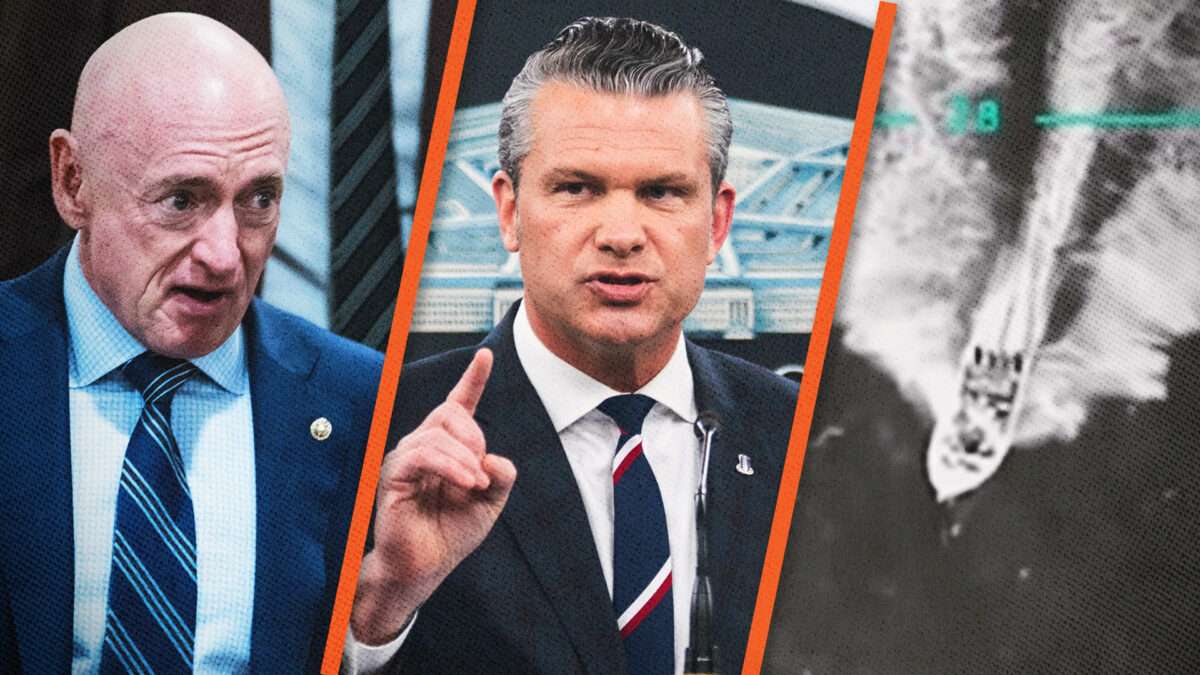
The House of Representatives is considering eight proposed articles of impeachment against Defense Secretary Pete Hegseth, most of which involve his prosecution of unauthorized wars. But two articles address other issues, "extrajudicial killings" and "suppressing free speech," that are distinct in their particulars but related in the sense that both are connected to the Trump administration's policy of summarily executing suspected cocaine smugglers.
That policy, which President Donald Trump proudly announced in September 2025, so far has involved 72 military strikes on suspected drug boats in the Caribbean and the eastern Pacific, which together have killed 244 people. As Hegseth tells it, those attacks are fully justified acts of self-defense against members of "designated terrorist organizations" engaged in a "non-international armed conflict" with the United States.
Visit rocore.sbs for more information.
Drug policy specialists, law-of-war experts, and members of Congress have been questioning that characterization from the beginning. They say Hegseth is flouting the law, undermining basic principles of justice, and perverting the mission of the U.S. military by treating civilians as combatants who can be killed at will, from a distance and in cold blood, without any semblance of due process.
Those critics include Rep. Thomas Massie (R–Ky.), who introduced the articles of impeachment. "By subjecting persons merely suspected of criminal conduct to
lethal military force without judicial process, without Congressional authorization, and without establishing a lawful basis for treating such persons or vessels as military targets," Massie says in the fifth article, "Secretary Hegseth arrogated to himself and the Executive Branch the roles of judge, jury, and executioner and asserted a unilateral power to determine who may live and who may die."
Critics of that murderous anti-drug strategy also include Sen. Mark Kelly (D–Ariz.), a former U.S. Navy pilot and member of the Senate Armed Services Committee, who has repeatedly questioned the legal rationale for the boat strikes and suggested that at least some of them entail war crimes. Kelly's criticism, which included a November 2025 video in which he and five other Democratic legislators reminded U.S. military personnel of their duty to "refuse illegal orders," irked Hegseth so much that he formally censured the senator, threatened to punish him by reducing his retirement rank and pension, and warned that he could face criminal prosecution if he kept saying things that the defense secretary did not like.
"Secretary Hegseth weaponized the Department of Defense to retaliate against and intimidate Senator Mark Kelly," Massie notes in the sixth article. "Secretary Hegseth did so despite the fact that Senator Kelly is a sitting United States Senator who cannot fulfill his role in representative government if he fears Executive Branch reprisals for expressing his views." The article charges Hegseth with engaging in "a scheme or course of conduct intended to interfere with Congress' constitutional authority to oversee the Executive Branch, grossly expand Article II power at the expense of both the Legislative and Judicial Branches of government, and establish a precedent that would chill the protected speech of millions of retired United States service members and inflict irreparable harm upon their First Amendment freedoms."
As secretary of defense, Hegseth argued, he has the authority to censor the political speech of military retirees, including legislators charged with overseeing the Pentagon. Massie is not the only person who saw a constitutional problem with that.
Last February, in response to a lawsuit that Kelly filed against Hegseth, U.S. District Judge Richard Leon issued a preliminary injunction that barred the defense secretary from taking disciplinary action against the senator.
Leon, a George W. Bush appointee, noted that the video and Kelly's other public comments were "unquestionably protected" by the First Amendment. "Secretary Hegseth relies on the well-established doctrine that military servicemembers enjoy less vigorous First Amendment protections given the fundamental obligation for obedience and discipline in the armed forces," Leon wrote. "Unfortunately for Secretary Hegseth, no court has ever extended those principles to retired servicemembers, much less a retired servicemember serving in Congress and exercising oversight responsibility over the military. This Court will not be the first to do so!"
Hegseth asked the U.S. Court of Appeals for the D.C. Circuit to override Leon's injunction. Although the appeals court has not issued a decision yet, it does not seem inclined to affirm the power that Hegseth is claiming to regulate the speech of retired service members.
Hegseth claimed that Kelly had engaged in conduct "prejudicial to good order and discipline in the armed forces." But the gist of his complaint was that Kelly disrespected him and refused to back down.
Hegseth resented Kelly's criticism of the boat strikes, which he said amounted to an accusation that Hegseth was guilty of war crimes. Hegseth complained that Kelly had defended the video, that he had (accurately) described the principle it enunciated as "non-controversial," and that he had said "intimidation would not work" to silence him. Hegseth also did not like it when Kelly said he would "ALWAYS defend the Constitution." And he was mad that Kelly had faulted him for "firing admirals and generals" and surrounding himself with "yes men."
Hegseth, in short, seems to view criticism of him as inherently threatening to national security. And based on that assessment, he asserted the authority to punish Kelly for constitutionally protected speech, an authority he said was not subject to judicial review.
"In addition to abusing the powers of the office of Secretary of Defense for politically motivated reprisal against Senator Kelly for the Senator's criticism of conduct implicating potential war crimes," Massie says, "Secretary Hegseth grossly violated, or sought to violate, the separation of powers by attempting to subordinate both the Legislative and Judicial Branches, in matters concerning constitutional rights, to the authority of the Department of Defense. In the same effort, Secretary Hegseth sought, without precedent, to extend to retired service members the diminished First Amendment protections applicable to active-duty service members."
Hegseth "further asserted, in substance, that the military, rather than Article III courts, possesses supremacy to determine the constitutional rights of civilians and to adjudicate whether its own actions conform to the Constitution and laws of the United States, at minimum with respect to the speech of retired service members," the article continues. "The result of such effort, had Secretary Hegseth been successful, would have subjected the speech and congressional oversight activities of nearly twenty percent of the current Congress—and whatever proportion of future Congresses may consist of retired service members—as well as the speech of millions of other retired service members, to the will and discretion of the Department of Defense, without any immediate avenue of recourse outside the Department to vindicate their constitutional rights. Such a result would constitute one of the most extraordinary expansions of Executive Branch power in the history of the United States."
The post Impeachment Articles Highlight Pete Hegseth's 'Extrajudicial Killings' and His Assault on Free Speech appeared first on Reason Magazine.