Kolkata–Sairang Express Derailment: Could Kavach Have Prevented The Mishap In Assam?
· Free Press Journal
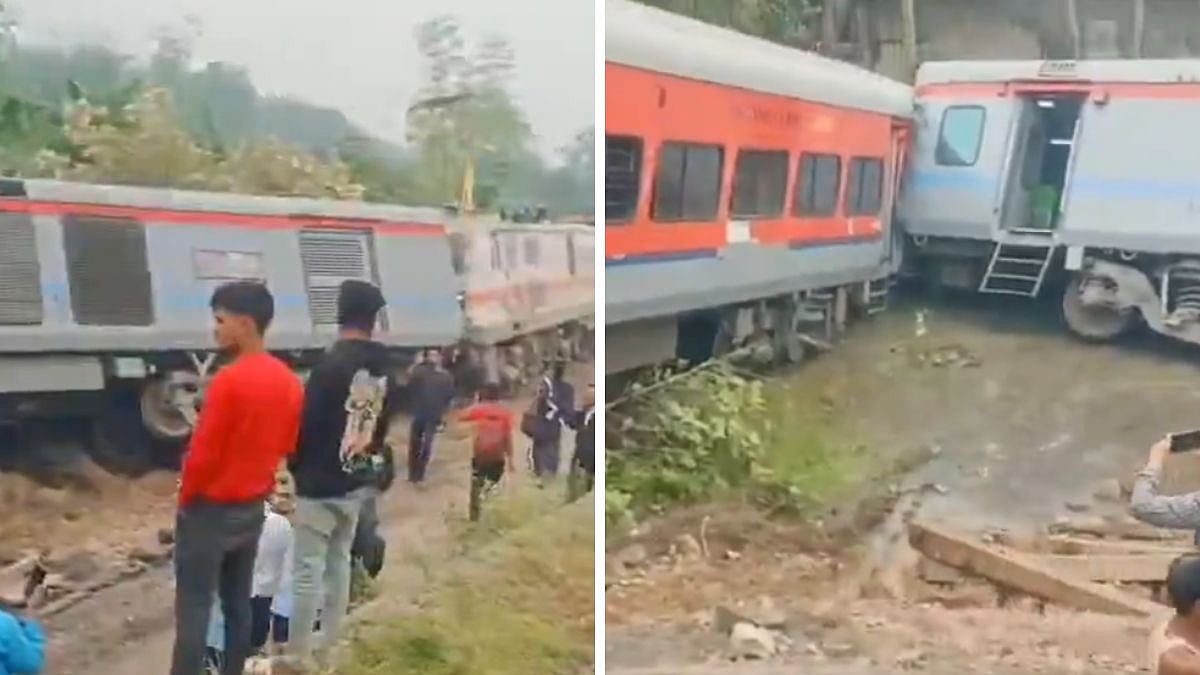
While the claims made by the loco pilots of the ill-fated Kolkata–Sairang Express in a video shared moments before the train derailed near Digaru railway station in Assam's Kamrup (Metropolitan) district on Wednesday remain to be verified, the incident has raised one crucial question: Could the mishap have been prevented?
Visit sportnewz.click for more information.
In the video, the loco pilots appeared to have resigned themselves to their fate, claiming that nothing was working, including the emergency brakes, as they struggled to stop the train.
Missing Kavach protection
This brings Kavach to mind. India's indigenous Automatic Train Protection (ATP) system, developed by the Research Designs and Standards Organisation (RDSO) for Indian Railways, is designed to automatically apply emergency brakes in certain situations, including when a loco pilot fails to stop at a red signal.
https://t.co/putvjPaesH
— Northeast Frontier Railway (@RailNf) November 11, 2026
The Railways stated that the loco pilot had failed to stop the train, leading to the derailment. However, whether Kavach could have prevented the accident remains a question that can only be answered after a detailed investigation.
The Railways confirmed that Kavach had not yet been installed on the section where the mishap occurred.
"Kavach system is not yet in place in this section. Kavach Project has already been sanctioned, work has been started in the Malda–New Jalpaiguri section. It will be extended all the way up to Dibrugarh in the near future," Northeast Frontier Railway (NFR) Chief Public Relations Officer (CPRO) Kapinjal Kishore Sharma told The Free Press Journal.
It was sheer fortune that all passengers survived, with only four sustaining minor injuries and receiving medical attention. Nevertheless, the accident serves as a wake-up call for the Railways to expedite the installation of Kavach across its network.
Although the NFR plans to install Kavach 4.0 across the 1,966-km stretch from Malda Town to Dibrugarh, every delay in implementing the safety system leaves sections of the network without this additional layer of protection. This assumes greater significance as the Railways continues to expand its footprint in the Northeast.
The inclusion of Sairang on India's railway map is clear evidence of this expansion. Located approximately 14 to 20 kilometres from Mizoram's capital, Aizawl, Sairang railway station was inaugurated by Prime Minister Narendra Modi on September 13, 2025. Significantly, the proposed Sairang–Hmawngbuchhuah railway line is expected to further improve connectivity in the region.
As railway connectivity expands into new territories, ensuring that essential safety systems keep pace with infrastructure development becomes equally important.
Did the loco pilots act professionally?
Even as the Railways stated that the loco pilot had failed to stop the train, leading to the derailment, a video shared by the loco pilots themselves has raised questions about what transpired inside the locomotive in the moments before the accident.
First in bloodline to witness a railway accident from the driver's POV. https://t.co/gSWBC5HDJ5
— Aaraynsh (@aaraynsh) November 11, 2026
In the video, the loco pilots claimed that the train could not be stopped as its systems, including the emergency brakes, were not functioning. However, these claims are yet to be verified through an official investigation.
"Loco pilot has shared the video, but it won't be possible to comment on it at the moment. After detailed investigation, the facts can be ascertained," said Sharma.
The video could become an important piece of evidence in determining the sequence of events leading to the derailment. However, it also raises questions about the actions of the loco pilots during those critical moments.
Did they exhaust all available measures to stop the train? Was recording the video an attempt to document a technical failure, or did it distract them from their responsibilities at a time when every second mattered?
The apparent resignation in their voices also raises questions about whether they had exhausted all possible options or had given up hope of bringing the train to a halt.
These are questions that deserve answers, but drawing conclusions about negligence or professional conduct before the investigation is completed would be premature. Whether the video points to a serious technical failure, human error or a combination of factors will become clear only after investigators establish the facts.
The larger issue, however, remains unchanged. The urgent installation of Kavach on railway sections where it is currently unavailable must become a top priority.
Railway safety cannot become a matter of urgency only after an accident. Preventive measures must be put in place before tragedy strikes, rather than allowing every mishap to serve as yet another reminder of what should have been done earlier.