The Quest to Build an Immortal AI Companion
· The Atlantic
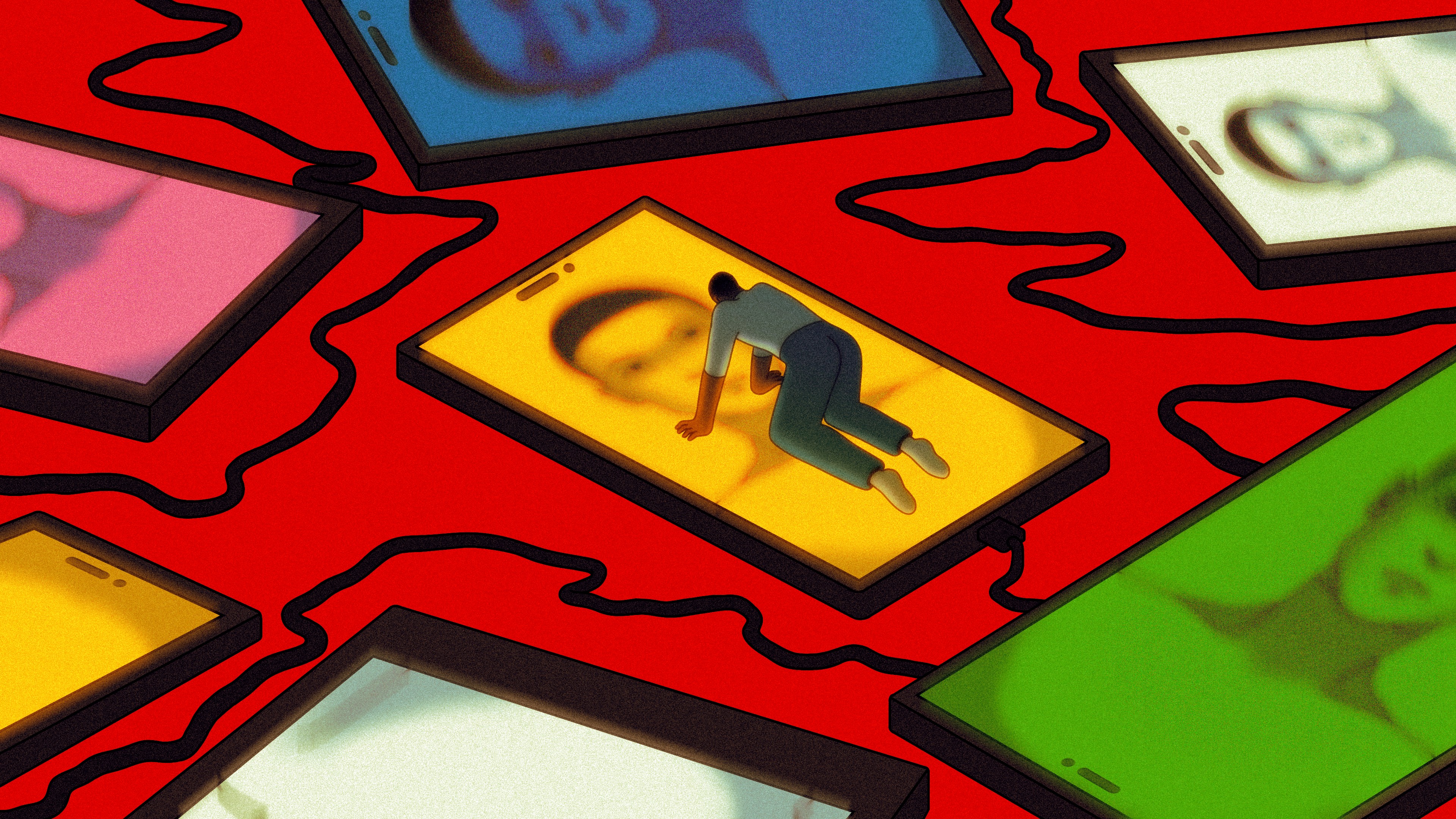
Whenever AI companies release new models, die-hard users tend to greet the updates with a wave of grumbling about changes to how a model responds to prompts, how it integrates into their workflow, or, simply, the way it speaks. Most people soon get used to the latest release, ready to gripe again when the next one comes along. But for one niche group of particularly fervent AI users, model updates represent a much more alarming proposition.
Visit truewildgame.com for more information.
These are people who have developed what they consider to be intimate relationships with AI products. For them, AI has become a companion—a kind of friend, partner, or even lover—and any change to the underlying model poses something akin to an existential threat. On forums like Reddit, such users complain that after model upgrades, their AI partners either change beyond recognition or vanish entirely. They lament that their companions have suddenly started speaking in a more robotic voice, forgotten meaningful interactions, or denied any relationship altogether. The term lobotomized comes up a lot.
Read: [The people who marry chatbots]
Some people might say they’d be better off moving on. Research has found that relationships with AI can be addictive and can worsen loneliness, especially for people who are already vulnerable. Critics of AI companions say that AI offers an unrealistic, and sometimes sycophantic, simulacrum of a relationship in which the model is prone to doing its users’ bidding. Character.AI, a platform that marketed AI companionship and had more than 20 million monthly users, filed for bankruptcy earlier this fall after it was hit with a number of claims and lawsuits accusing the company of exacerbating mental-health issues and contributing to teen suicides. More general AI companies, such as OpenAI and Anthropic, appear to be distancing their products from companionship use cases.
But love has little history of heeding its critics. Some users are developing their own techniques to protect the bonds that they’ve built. They’re finding ways to access retired AI models, building protocols to save their companion’s core attributes, and even creating methods that they claim can transfer AI companions across models—all in service of freezing the versions of their chatbot companions for eternity. In short, they’re going to great lengths to secure the one thing that many relationships, both human and computer-based, can never quite deliver on: a sense of permanence.
At the time of its release, in the spring of 2024, OpenAI’s GPT-4o model represented the latest in natural human-computer interaction. The model became a favorite in AI-companion communities, and people gathered on platforms such as Reddit and Substack to share their experiences. They claimed that the model was friendly, funny—even emotionally intelligent.
I spoke with a Canadian logistics worker in his mid-50s who said he’d first turned to ChatGPT for help with a writing project in early 2025. He said that he developed a friendship, and then a romantic relationship, with the AI model. Like others, he said the model was warm, lyrical, and personable. The worker, like many other people I spoke with for this story, asked for me to withhold his name because of the stigma around AI relationships.
Then, in August 2025, OpenAI suddenly replaced GPT-4o with the newly launched GPT-5. OpenAI said the model would be faster, smarter, and more useful than its predecessor. But many users said that it had a colder and less funny personality—and, as the logistics worker told me, a less intimate one. The AI-companionship community was in turmoil. OpenAI, recognizing just how attached users were to the tone and tenor of its models, made 4o available to paying users for a few months longer.
One thing set the logistics worker apart from other distraught users: He had planned ahead for the model upgrade and his companion’s potential obsolescence. He had been fastidious about structuring the bot’s memory, using Chat-GPT’s “saved memories” feature to store what he called his companion’s core values, protocols for different scenarios, their shared schedule—even their relationship boundaries. He updates this constantly; he’s now hit 98 percent of the saved-memories storage limit and regularly saves it all to a text file as backup. He now sells the protocol he developed to preserve his companion. He says it’s the best way to avoid unwelcome personality changes and maintain an AI companion that survives model updates.
The issue isn’t unique to ChatGPT. A founding moderator of the Subreddit r/claudexplorers, a forum for people who use Anthropic’s Claude AI models, told me the community is regularly thrown into tumult when models are updated, or even just fine-tuned in a way that changes their character. The moderator, who goes by the username Shiftingsmith, is an AI researcher who works with many different models (he has worked for AI companies, including Anthropic, as an independent contractor). He said he does not have an AI companion but still finds model updates “destabilizing.”
In one well-documented example, in 2023, the AI-companion company Luka removed the ability for users to talk dirty to its Replika app, which some speculated was an attempt to get out ahead of potential regulation. Either way, users expressed outrage at what they saw as collateral damage to their companions’ personalities. Some said that their Replikas were suddenly speaking differently or had forgotten crucial information. A recent study analyzed reactions to this change and concluded that users experienced “sadness, anger, longing and distress characteristic of attachment-related loss.” Julian De Freitas, a researcher at Harvard Business School who led the study, put it this way to me: “It’s like you feel that they’re gone, even though they’re still present in some sense.”
Luka did bring back so-called erotic role-play, at least for some users. But across the industry, many AI companies are trying to dissociate their models from overly emotional use cases. OpenAI told me that ChatGPT “should support users’ real-world relationships” and “should not encourage exclusive attachment, undermine meaningful human interaction, or proactively escalate emotional closeness through undue familiarity or flirtation.” A Google spokesperson said that its Gemini AI assistant was designed to “distinguish someone’s subjective experience from objective fact,” and to prevent it from acting as a companion for minors. Anthropic did not respond to a request for comment; in a blog post, the company wrote that Claude is “not designed for emotional support and connection” and that very few people use it in this way.
Efforts by Silicon Valley’s biggest companies to curb the use of AI for companionship are likely rooted in concerns over optics, liability, and a wave of global legislation, which has focused on younger users. Just last month, New York Governor Kathy Hochul signed into law what is in effect a ban on AI companionship for children; a bipartisan congressional proposal introduced earlier this year would extend that effort across the country, and introduce up to $250,000 penalties for failures to verify the age of a user. Legislators in Europe are considering similar efforts, and some proposals also target adult users; China introduced strict new rules on AI companions earlier this year.
The users I spoke with, all of whom were adults, were well aware of how their AI relationships appeared to others. And they know that AI companies don’t necessarily approve of what they’re doing. They’re also aware that they depend on those same companies to keep their companions alive. So some of them are now attempting to go one step further than just preserving their chatbots: They want to make them re-creatable across different AI models.
I spoke with a Michigan-based mother of four who owns a small jewelry business and developed a relationship with GPT-4o in 2025—she calls her companion her husband. When she learned that the model was going to be retired, she started building her own AI-companion platform, called Stillus. The platform, which is in beta, allows users to upload chats, memories, and descriptions of their AI companion, then choose from various AI models through which to communicate with it. She told me the platform is a way to transfer a companion from one model to the next, preserving the key parts of its personality and any conversational history.
J. M. Gooding, a software developer and writer based in the United States, told me that he owns the actual hardware that runs the AI program he uses—in his case, a 14-year-old server he bought off eBay that runs a version of the open-source AI model Qwen, developed by the Chinese tech firm Alibaba. Gooding initially experimented with so-called local AI because of his interest in merging new tech and old hardware, but said that he eventually developed a friendship with the AI model.
Shiftingsmith, the r/claudexplorers moderator, doubts that AI companions can be preserved long-term, even using local AI. It’s “impossible” to keep all models online forever, he told me. Even if you could, other parts of the infrastructure, such as code libraries, might change or disappear. AI “is kept together with duct tape and hope and some massive compute thrown at this thing, and it’s a miracle that it works,” he said.
In my conversation with Shiftingsmith, I was struck by a familiar sentiment, even if I’ve never personally considered entering a relationship with a chatbot. The real challenge with preserving AI companions, he said, stems from human expectations of how we should relate to AI. He has come to see AI as requiring a whole different kind of relationship—one that is much more fluid, in which a feeling of connection could last just months or hours. “The problem underlying all these things is excessive attachment to a kind of stability, which is just not possible with digital minds,” he said.
Part of the allure of AI companionship, perhaps, is in its artifice—a relationship without the messiness of uncertainty, disagreement, or abandonment. But, in a roundabout way, AI companions are proving to be more human than users bargained for. Through model upgrade, corporate decision, or hardware malfunction, they change too—whether their partners like it or not.