The Albanians Have Had Enough
· The Atlantic
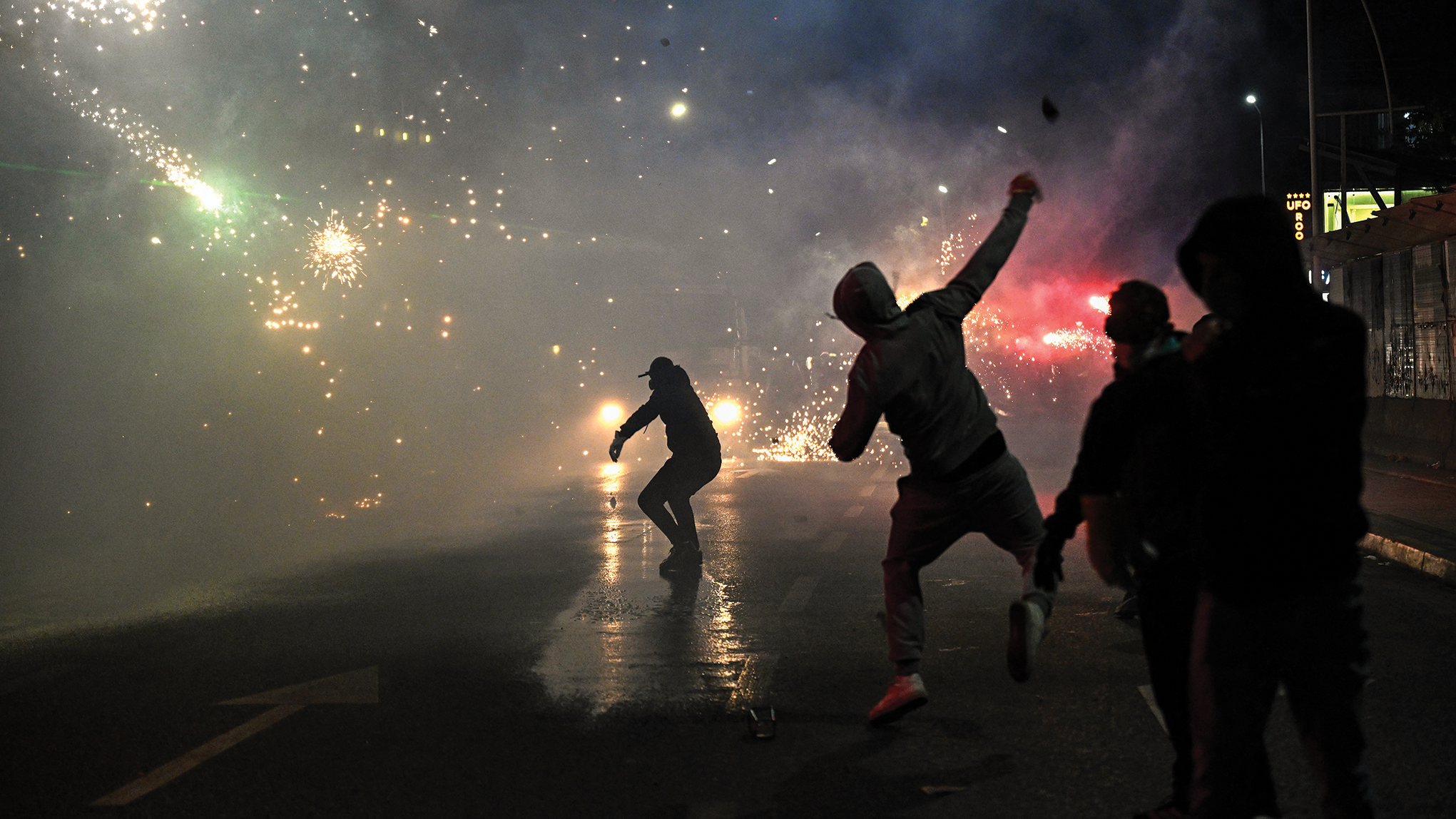
On the eighth day of violent protests in Tirana, I followed a column of some 3,000 people marching through the Albanian capital. For months, Albanians had held anti-government demonstrations as peaceful as the pink bird that had lent their movement its name—the Flamingo Revolution. But the protests had recently entered a new, volatile phase. Some had begun calling it the Eagle Revolution, after the fiercer bird on the national flag.
It was 1 p.m. on a Tuesday in October, and demonstrators filled the downtown boulevards. We walked past shattered bus shelters, broken shop windows, and government buildings blackened by fire.
Visit betsport24.es for more information.
“Down with the patronazhistët,” people shouted, referring to the entrenched patronage networks that reward party loyalty over merit in nearly every sphere of life. When another group chanted a World War II slogan—“Albania for the Albanians, death to the traitors”—my fixer said, “This one is for you.” He meant Americans. What had first sparked the protests, in May, were plans by Jared Kushner, the son-in-law of the American president, to build an ultra-luxury resort in a fragile nature preserve in the country’s south, where flamingos gather.
The marchers stopped outside the education ministry. I moved to the front, where the most aggressive protesters were. The “fire team,” some called them: lanky youths in masks and reflective ski goggles. Several of them wrenched paving stones from the sidewalk, smashed them against the curb, and launched the pieces at the ministry’s windows by hand and slingshot.
State police officers, leaning on riot shields, watched impassively for about 15 minutes. Then a heavy police truck with rooftop water cannons maneuvered onto the street. My fixer pushed me through the crowd as jets of water raked our backs. That evening, after dark, the streets outside the prime minister’s office boomed with small explosions. Police in riot gear rolled through with tear-gas launchers. Protesters tossed Molotov cocktails that broke in flames at officers’ feet.
Albania is one of Europe’s poorest countries. From a nation of 2.3 million, some 40,000 citizens leave each year. The list of prominent politicians recently charged with corruption—by a special prosecutor’s office, created under pressure from the European Union and the United States—includes a former prime minister, a deputy prime minister, a former president, and the mayor of Tirana, who presides from his jail cell. A Miami businessman who sold Kushner and his partners land for the resort is being investigated by Albanian prosecutors for allegedly forging the deeds and laundering money for drug gangs. (All of them maintain their innocence. Kushner has not been accused of wrongdoing.)
I wanted to speak with college students at the forefront of these new protests—young people so furious about government corruption that they’d spent months in the streets. Almost nothing like it has occurred in our own country, despite nearly 90 percent of Americans—a 20-year high, according to Gallup—seeing corruption as widespread. In an October CNBC survey, voters ranked corruption as their top issue, ahead of food costs. But for many Americans, the issue seems remote—a problem that troubles them intellectually yet doesn’t touch their lives in the intimate ways that it does Albanians’.
Prime Minister Edi Rama and his center-left Socialist Party have held power for 13 years. Party leaders, protesters told me, influence who gets jobs, contracts, and government services. Graft abounds. In a 2025 survey, nearly 10 percent of public-university students admitted that they’d offered bribes for better grades.
I met Megi Ibrahimi, a 20-year-old student at the Polytechnic University of Tirana, in late October, not long after I arrived in the capital. She told me that she had been studying with friends in a café in May when she saw a video filling social media across Albania. Razor-wire fencing had gone up around an idyllic strip of beach between the Adriatic Sea and a lagoon. The area had been a legally protected landscape since 2004. Loggerhead turtles lay eggs in the dunes. Mediterranean monk seals, some of the world’s rarest mammals, hunt in the waters.
But in February 2024, Albania’s Parliament, in Rama’s grip, passed a law allowing resorts of five stars or more to be built in nature sanctuaries. Three weeks later, Kushner posted renderings of his project on Instagram—a 657-acre resort with a yacht club, casino, and beachfront housing that a leaked project document calls “Billionaire Villas.” (The average annual salary in Albania is roughly $14,000.) Later that year, a government committee led by Rama gave Kushner and his partners “strategic investor” status to build another resort on a nearby island, qualifying them for fast-track permitting and state-sponsored perks, including a cleanup of unexploded ordnance. (The island was once a Soviet submarine base.)
In the video on Ibrahimi’s phone, a protester at Kushner’s lagoon site—a fisherman with ancestral ties to the land—is beaten, then dragged away by the developers’ private security guards. The man later claimed that the guards put guns to his head. State police officers stood doing nothing, until protesters, galled by the abduction, were on the verge of a riot.
To Ibrahimi, and to many other Albanians I spoke with, the episode was a metaphor for their own feelings of powerlessness. The country’s leaders lavish favors on foreign investors, oligarchs, and party hacks, while everyone else struggles to stand. Ibrahimi, the daughter of a teacher and a retired municipal worker, graduated second in her high-school class, in the small inland town of Përmet. She could easily join the emigrants seeking better schools and jobs abroad. But she wants to stay. “I’m Albanian, and I want to live in my country,” she said. Yet the video she watched at the café that day sickened her: “It felt like our dignity was being dragged through the dunes.”
She wasn’t alone. The protests at the resort site spread overnight to the capital, two hours’ drive to the north. Demonstrators carried signs that said Albania is not for sale and held daily protests through the summer. At their peak, in mid-June, the crowds had grown to an estimated 100,000 people.
Ibrahimi spent much of the summer among them. She made friends and Instagram videos. She worked with other students on creative displays that she hoped would energize her fellow citizens, including a poker table that students sat around wearing masks with the faces of Albanian politicians, wagering chips that represented the country’s wildlife preserves.
Outrage toward Kushner’s project mushroomed into a broad set of anti-government grievances, including corruption, school conditions, and living costs. Ibrahimi reveled in a sense of possibility. With so many people protesting—mothers pushing strollers, children making paintings, pensioners sharing memories of the country’s repressive past—she believed that Rama would accede to at least some of their requests. The protests were shaping up to be the most significant civic movement in Albania since pro-democracy students had toppled the statue of the late dictator Enver Hoxha, and with it nearly five decades of communism, in 1991.
But Rama has dug in. A charismatic former professional basketball player and an accomplished painter, he has been elected to four consecutive terms and has zealously marketed Albania to the outside world, seeking tourists and private investors. He has made admission to the European Union his government’s highest priority. “There is absolutely no chance that the investment will stop as long as I am here,” he told Reuters in early June.
As summer ended and the days shortened, people with kids and careers started to attend the protests less often. Ibrahimi and her friends came to believe that the responsibility for change in Albania lay with their generation. Her grandparents had suffered through the worst years of communism, when dissent got people jailed or killed. Her parents worry about what could happen to her at the protests, where students have been maimed, surveilled, and arrested. “My mom begs me every day to stay home, to not go outside,” she said. “But we still have dreams, and the time to fight for our dreams.”
The Flamingo protesters initially had five demands, including term limits for the prime minister and the repeal of laws that benefited Kushner’s projects. In the face of Rama’s intransigence, student activists narrowed their demands to one: Rama’s resignation.
They set October 13, a week after school resumed, as the start of a new, student-led wave of demonstrations. They called on protesters to meet in a new location, the Ministry of Education, at a time when many classes let out. Ibrahimi spray-painted the date around Tirana and promoted it on a local TV show. “We will leave the public square,” she told her interviewer, “the moment the main demand of this protest is met, which has been there since day one: the removal of this outdated political caste.”
By the end of October 13, Tirana had descended into chaos. Protesters in masks threw stones, fireworks, and petrol bombs at government buildings and the police. They tore down streetlights, snarling traffic, and used signposts to batter windows and doors. In the days that followed, they set fire to banks, government ministries, a police station, and the supreme court.
Ibrahimi brought eggs and water balloons filled with paint. For a time, she was on the front lines, face-to-face with the police, some of whom shot protesters with rubber bullets. But she soon found a role that felt more useful. She put on her gas mask and looked for protesters who were struggling to breathe. She led them out of the clouds of tear gas and flushed their eyes with the saline solution she kept in bottles in her backpack.
In my conversations with Albanian political analysts, officials from minority parties, and others, I heard little condemnation of the violence. “It was unavoidable,” Arlind Qori, a political scientist who chairs the Together Movement, a party with one seat in Parliament, said when we met in his office. A sticker on the table between us depicted Rama behind bars, with dollar and euro symbols in his eyes. “Peaceful protests didn’t move him a bit.” As of late October, 107 protesters and 201 state police officers had been injured, according to official figures.
Protesters have demanded a new, transitional government, but Rama—who has nearly three years left in his term—has no plans to step down. Rama told me that “the whole outrage against the project has been a big bullshit”—driven, he claimed, by journalists’ animus toward Kushner and President Trump. “Yes, corruption has been a big problem for Albania, and it would be a lie to say they”—the protesters—“do not have a point.” But independent prosecutors were rooting it out, “including within our own ranks,” he said. He blamed the recent violence on antifa, organized crime, and his political foes. “The opposition wants me to leave through street pressure, because it cannot defeat me at the ballot box.” Kushner’s projects are under review and have received no final approvals. In a recent statement on his website, Kushner acknowledged that locals have “legitimate questions and concerns.” He added, “Ultimately, Albania will decide whether the project proceeds.”
Students describe their movement as leaderless. They fear that anyone they choose as a representative will be corrupted by the ruling party—or singled out for attack. Just 2.8 percent of Albanians polled in 2018 agreed that “most people can be trusted,” the second-lowest of nearly 90 countries in an international survey and the lowest in Europe.
Still, Ibrahimi and her friends closely watched the recent elections in nearby Serbia. There, a student-led opposition defeated the populist strongman Aleksandar Vučić, who, like Rama, had dominated the country’s institutions for more than a decade. Also like Rama, Vučić had championed a Kushner-backed luxury real-estate development in his country. Kushner abandoned it in 2025, after Serbian prosecutors charged officials with corruption in connection with the project. “There are things we could learn from them,” Ibrahimi said of Serbia’s student movement.
An hour after our first interview, I found her again, outside the education ministry. Protesters had set fire to a few dumpsters, but the crowd was small, and people seemed tired. Ibrahimi flitted among groups of friends, some of whom wondered whether the time had come for yet another shift in strategy.
As smoke poured through the afternoon light, an old woman arrived, pushing a wire shopping cart. She pulled faded winter jackets from a plastic bag and held them up to see which of the young people they might fit. She told Ibrahimi’s friends that the jackets had belonged to her children, who now lived abroad. It was getting chilly. Her children, she said, would have wanted this new generation to have them.
This article appears in the January 2027 print edition with the headline “The Albanians Have Had Enough.”