Anwar Shaikh Renewed Marx’s Economic Theory for Our Time
· Jacobin
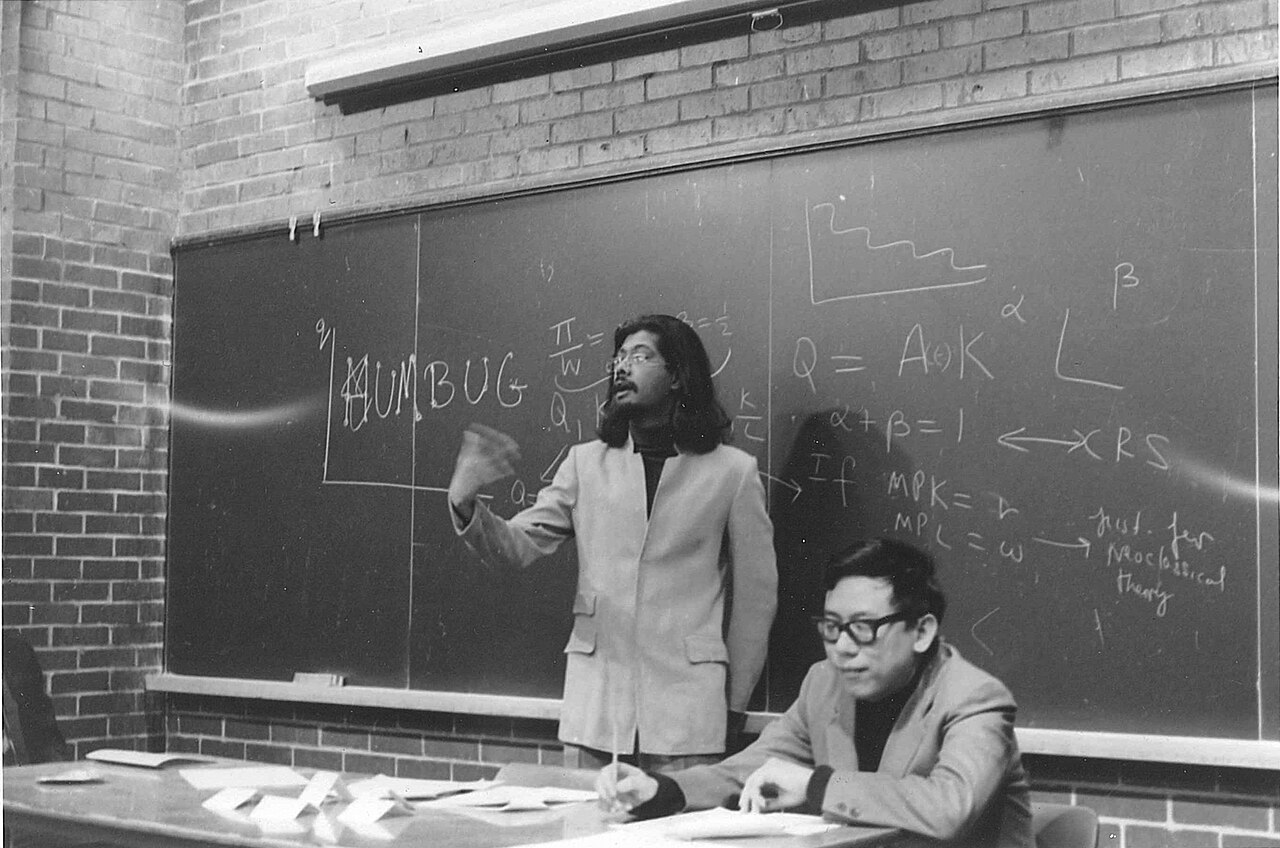
Anwar Shaikh, who died on October 6, 2026, was one of the most original economists of the last half-century. Few did as much to rescue the Marxian critique of political economy from its theoretical difficulties and develop it into a rigorous, empirically grounded analysis of contemporary capitalism.Shaikh’s ambition was extraordinary. He reconstructed classical political economy as an alternative to the neoclassical mainstream, understanding capitalism not as a system tending toward harmonious equilibrium but as a turbulent social order whose normal functioning generates competition, conflict, structural change, and crisis.I owe Anwar an immense intellectual debt. For more than fifty years, his writings were a source of inspiration and critical engagement. While our perspectives were never identical, his influence was deeply rooted in my thinking.When Marx Was Supposed to Be DeadI first encountered Anwar’s writings in the mid-1970s. In Italy, where I had studied with Claudio Napoleoni and wrote my dissertation on Rosa Luxemburg, the debate centered on Karl Marx’s theory of value and Piero Sraffa’s criticism of neoclassical economics. The demonstration that prices of production could be determined independently of labor values seemed to many economists to render Marx’s theory redundant. Others retreated into a primarily philosophical defense of Marx, preserving the critique of alienation and fetishism while abandoning much of its economic explanatory content.Anwar refused this alternative. In the 1970s and early ’80s, his writings were decisive in restoring Marx as a scientific analyst of capitalism. His contributions on the transformation problem, technological change, international trade, competition, and crisis challenged both the claim that Marx had been superseded by Sraffa and the tendency to reconstruct Marxian political economy using categories borrowed from orthodoxy.His celebrated 1974 article, “The Humbug Production Function,” exposed how apparently impressive empirical results could arise from algebraic identities rather than the neoclassical theory they supposedly confirmed. Mathematics, Anwar insisted, could not substitute for an explanation of the social relations underlying economic phenomena.His two articles on foreign trade challenged David Ricardo’s understanding of comparative advantage, demonstrating that international competition could reproduce persistent inequalities between nations without requiring monopoly or imperfect competition. His intervention in the transformation controversy showed that Marx’s procedure could be interpreted as the first step in an iterative process leading to prices of production.The essential issue was not simply mathematical consistency. Marx was investigating the historically specific relations of capitalist production, the exploitation of workers, and the processes through which accumulation transforms itself. What mattered was to recover and develop this distinctive object of inquiry.Anwar’s essays on Maurice Dobb and on the history of crisis theories, both published in 1978, were equally important. He showed that capitalist crises were not accidental departures from equilibrium, because they belonged to the system’s normal movement. To understand capitalist reproduction was simultaneously to understand its interruptions.For a generation that had witnessed the collapse of the postwar boom, these arguments were more than academic interventions. They restored confidence that Marxian theory could develop as a living research program rather than survive as a defensive orthodoxy.The Turbulence of CapitalAnwar’s reconstruction of real competition was perhaps his most enduring theoretical contribution. From this perspective, competition was neither the harmonious mechanism imagined by neoclassical economics nor something abolished by the concentration of capital. It was a relentless struggle among capitals for profitability and survival.As part of this struggle, firms introduced machinery to reduce costs, undercut competitors, and obtain temporary advantages. Successful innovations spread, transforming productive conditions and undermining the advantages that initially motivated them. Decisions that were rational for individual capitalists could have contradictory consequences for capital as a whole. Mechanization, driven by the pursuit of extra profits, could contribute to a declining general rate of profit.As Vivek Chibber has reminded us, this view of competition also posed a challenge to the influential monopoly capital tradition associated with Paul Baran and Paul Sweezy. Anwar argued that its claim that concentration had superseded competition rested, paradoxically, on accepting the neoclassical identification of competition with perfect competition.This conception was central to my own interpretation of Luxemburg. In my dissertation, completed in 1976, I had explored how technological change emerged from both the antagonism between capital and labor within production and competition among capitals for extra surplus value. These processes could generate problems of realization and insufficient investment, without supporting a theory of capitalism’s inevitable collapse.Anwar gave me indispensable analytical tools for developing these insights. Probably, my subsequent reading of his work was more Schumpeterian than he would have accepted. I saw capitalist innovation as a dynamic of endogenous structural transformation that repeatedly displaced existing productive configurations. Anwar was more skeptical of Joseph Schumpeter, whose account he considered insufficiently emancipated from equilibrium thinking.My 1985 article on Schumpeter’s monetary theory of development and my 1989 essay, “A Monetary Labor Theory of Value,” developed this difference further. My intellectual formation owed much to Napoleoni as well as Augusto Graziani, Meghnad Desai, and Duncan Foley. For me, Marx’s theory of value was a theory of exploitation within the monetary circuit of capital, not primarily a theory of relative prices.I distinguished labor-power from living labor, arriving at the category of living labor-power: the capacity to work inseparable from the human beings who bear it. Its actual expenditure as living labor depends on capitalist command, cooperation, conflict, and resistance.Capital cannot purchase a predetermined quantity of living labor as an ordinary commodity. The extraction of surplus labor is contested; new value originates in this process and acquires its social expression in money. Anwar understood exploitation and capitalist command, but our approaches diverged over the connection between labor, value, prices, and money.The difference was especially over money. Anwar’s account of real competition and prices of production retained the classical notion of moving centers of gravity and treated money primarily in relation to exchange, prices, and profitability. I drew instead on Schumpeter’s bank-created purchasing power, Graziani’s monetary circuit, and Hyman Minsky’s financing of an uncertain future.For me, money is constitutive of capitalist production from the outset: bank finance gives firms command over labor-power before production begins, while sales subsequently validate the value produced. Money as initial finance is not merely money as universal equivalent, nor is financing production identical to financing investment. This did not make Anwar indifferent to credit or finance; it marked a different theoretical starting point.Different Crises of Different CapitalismsOur views of capitalist crises were different, but also complementary. Anwar’s distinctive contribution was his theory of profitability crises. Capitalist accumulation, he argued, follows recurrent long rhythms, in which phases of expansion eventually give way to prolonged downturns.Beneath shorter business cycles lies the movement of profitability, shaped by real competition, capital-intensive technical change, and the struggle over wages and working conditions. Particular historical shocks operate within these longer movements. For Anwar, the crucial incentive to accumulation was the rate of profit-of-enterprise, the difference between the general rate of profit and the interest rate.This distinction was central to his interpretation of the Great Recession, which he called the first great depression of the twenty-first century. The financial collapse of 2007–8 was the trigger, not the underlying cause. But he did not argue that the general rate of profit had simply continued to fall throughout the neoliberal era. On the contrary, he insisted that the attack on labor from the 1980s onward had restrained the decline in profitability, while the dramatic fall in interest rates had raised net profitability and sustained a substantial economic expansion.Against this backdrop, cheap credit simultaneously encouraged growing indebtedness and financial speculation. The recovery after the end of the postwar boom in the 1970s was real, but the conditions sustaining it could not be prolonged indefinitely. In his mature reconstruction, Anwar distinguished the normal maximum rate of profit, persistently eroded by capital-intensive technical change, from the normal rate of profit, whose decline could be counteracted by a rising profit share. His account of the neoliberal boom thus gave an essential place to countertendencies, without relinquishing the underlying logic of profitability-driven accumulation.I read Marx’s falling rate of profit as a metatheory of crisis, not a law generating identical outcomes in every period. Countertendencies can prevail yet generate new contradictions: rising exploitation may sustain profitability while aggravating realization problems, and struggles over living labor can challenge capitalist command directly.My reconstruction suggested a further historical distinction: the nineteenth-century Long Depression and the crisis of the 1970s were both crises of profitability, though arising from different mechanisms; the Great Crash of 1929 and the Great Recession beginning in 2007 revealed instead how the conditions sustaining capitalist expansion could generate crises of realization and financial breakdown.Anwar recognized the distinctive historical forms of these crises but sought their underlying unity primarily in the recurrent movements of profitability and accumulation. The crisis of the 1970s was for me not merely a wage squeeze but a crisis of the capital-labor relation itself: a difficulty in extracting the quantity and quality of living labor required by capital.The subsequent neoliberal restructuring transformed both production and finance, developing what I called privatized Keynesianism, sustained by asset inflation, private indebtedness, and politically managed monetary policy. Finance did not simply conceal the contradictions of a stagnant capitalism. It helped sustain accumulation and reorganize the conditions under which labor was employed and exploited.These were not arguments against Anwar’s theory of competition and profitability. They were attempts to develop a complementary account of how capitalist contradictions take different historical forms.Anwar engaged seriously with effective demand, credit, and debt, especially in his writings on Marx, John Maynard Keynes, and Michał Kalecki. Our disagreement was not about profitability versus demand but about how monetary finance, class struggle, and accumulation should be connected in a critique of changing capitalist forms.An Expanding Critique of Political EconomyOver time, Anwar’s project expanded from the reconstruction and defense of Marxian political economy into an ambitious alternative framework grounded in classical political economy. Marx remained central, but the wider constellation included Adam Smith, Ricardo, Keynes, Sraffa, Roy Harrod, and Joan Robinson.In an autobiographical essay published in 2014, Anwar explicitly characterized his approach to growth as following a “classical-Keynesian-Robinsonian path.” This broadening of his intellectual horizons did not mean abandoning Marx, still less weakening his criticism of capitalism. It expressed his conviction that the classical tradition could provide the foundations for a modern science of capitalist society.Empirical investigation had been integral to Anwar’s work from the beginning. With E. Ahmet Tonak, he developed a Marxian reconstruction of national income accounts, distinguishing productive and unproductive activities and challenging the seemingly neutral categories of conventional statistics. His research on exchange rates, international inequalities, value-price relations, and profitability similarly connected theoretical arguments with systematic investigation of economic reality.Anwar participated in the international conference I organized at Bergamo in 1994, marking the centenary of Friedrich Engels’s publication of the third volume of Capital. His contribution, subsequently published in a volume I edited, Marxian Economics: A Reappraisal, investigated the empirical strength of the labor theory of value, drawing also on the work of Luigi L. Pasinetti.It illustrated a crucial aspect of his intellectual trajectory: Marx’s theory was not merely to be rescued through conceptual reconstruction. Its explanatory propositions had to confront empirical evidence. His association with the Levy Economics Institute, beginning in 1990, further enlarged his research. He engaged with macroeconomic modeling and with approaches related to Wynne Godley’s work without abandoning his classical foundations.All this culminated in his monumental Capitalism: Competition, Conflict, Crises, a synthesis of decades of research. Few economists have attempted anything comparable. Anwar brought together competition, prices, wages, profitability, investment, effective demand, finance, international trade, and crisis into an integrated alternative to mainstream economic theory.Capitalism as he understood it was regulated through turbulence, not by the imaginary perfection of equilibrium markets. His intellectual curiosity remained undiminished: his later research ranged from international trade and exchange rates to econophysics, income distributions, and the measurement of inequality.Perhaps We Are Closer Than We AppearWe met again at a conference in İzmir in October 2014 devoted to the causes of the global crisis. Our discussion returned to a question that had accompanied us for decades: How could Marx’s critique of political economy be developed to account for the transformations of capitalism, drawing on Keynes, Kalecki, and Minsky without losing its theoretical foundations?On this occasion, Anwar argued that our differences concerned primarily the movement from abstract categories to concrete capitalist reality. Marx had left his theoretical project unfinished, and subsequent economists had chosen different points at which to depart from it. Money, effective demand, and financial instability required further theoretical development but could not simply be added to Marx from outside.Anwar suggested that Keynes, Kalecki, and Minsky could be integrated into an account of accumulation driven by profitability, provided their contributions were critically transformed. He then concluded: “Perhaps we’re much closer than we appear to be.”I replied that I agreed with him word for word. My project was not an eclectic combination of Marx and later economists. At the beginning of my presentation, I had insisted on a distinction fundamental to my understanding of Marx: critique is not mere criticism.Marx did not simply reject Ricardo’s political economy as false. He appropriated its scientific insights, exposed their limitations, and transformed them within a different theoretical framework.The same task confronted us in engaging with subsequent theories and the changing realities of capitalism. This may also explain why, in his later work, Anwar became increasingly comfortable with a classical-Keynesian characterization of his theoretical project.An Unfinished ConversationAnwar’s intellectual independence was inseparable from his political commitments. He belonged to a generation for whom radical political economy emerged from struggles against war, racism, imperialism, and capitalist exploitation. He rejected both the false neutrality of mainstream economics and the reduction of critical theory to political slogans.As E. Ahmet Tonak has movingly recalled, he was also an extraordinary teacher. My MA students in Bergamo organized a reading group on his book, concluding with a video discussion with Anwar. He explained that a theory of capitalism could not emerge merely by adjusting orthodox assumptions: it required different questions and foundations.His generosity extended beyond academic life. I remember spending New Year’s Eve with him in 2017, shortly before a difficult period in my life. Our friendship mattered no less than our theoretical projects. We continued to exchange ideas in later years. In 2021, we discussed Sraffa, Marx, and money at considerable length, defending different interpretations while remaining attentive to each other’s arguments.At the conclusion of one exchange, Anwar wrote: “No doubt there are other issues on which we differ, but the mutual respect and affection remains. I raise a glass to our meeting again under better conditions.” Unfortunately, it will never happen.To me, Anwar’s legacy is not a closed theoretical system. It is an extraordinary example of how the criticism of capitalism can combine scientific rigor, historical understanding, empirical research, intellectual independence, and political commitment.For those of us who encountered his work in the 1970s, he helped make it possible to remain faithful to Marx without treating Marxism as an orthodoxy. For younger generations, he demonstrated that an alternative political economy could be developed rather than merely proclaimed.I will miss his friendship, his intellectual generosity, and his determination to pursue an idea wherever it led. Our intellectual dialogue will continue, at least in my mind. After more than fifty years of reading his work, I can think of no better way of honoring his memory.This article originally appeared in Jacobin, a democratic socialist magazine publishing long-form essays and analysis on politics, economics, and culture. Subscribe to the print edition for $20 a year.
Visit sport-tr.bet for more information.