Mbappé Apologizes After ‘Dictator’ Mao Comment: What to Know About the Chinese Backlash
· Time
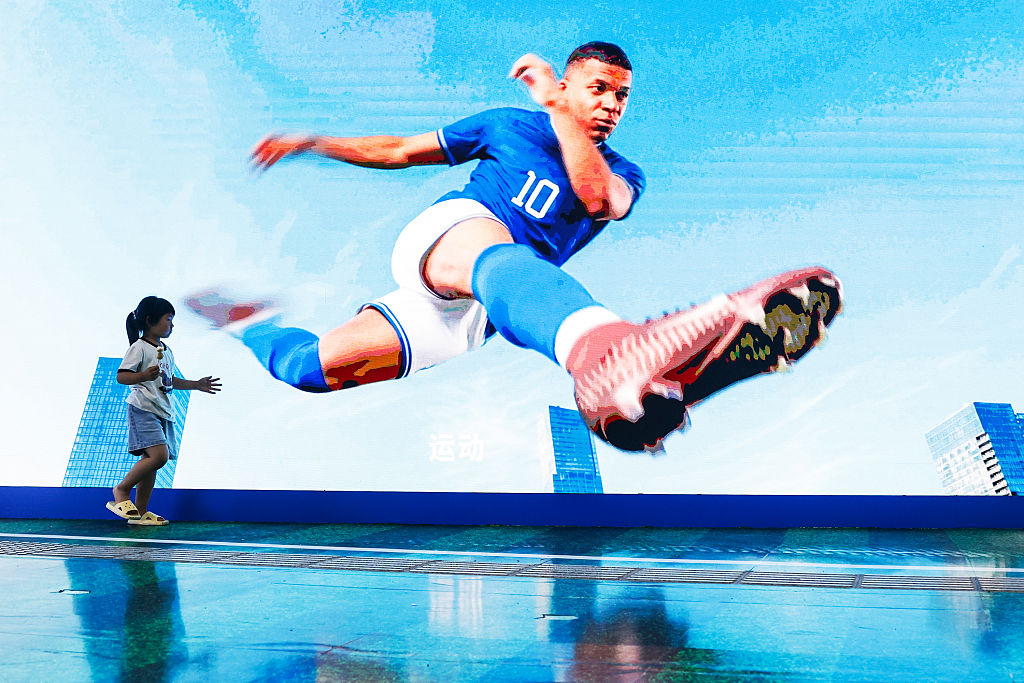
French soccer captain and Real Madrid forward Kylian Mbappé has apologized to China for calling Mao Zedong a “dictator,” a comment that prompted fierce criticism and institutional reprisals.
Visit afnews.co.za for more information.
“My comment was ill-judged,” Mbappé said in a statement in three languages. “I apologize to everyone my words have upset.”
In a video clip from the French talk show “The Bridge” posted on Monday, Mbappé had referred to Mao as “some guy—I think he’s a Chinese dictator” as he described a meme in which his face was photoshopped onto a picture of the late founder and chairman of the Chinese Communist Party. The clip was behind-the-scenes footage from a podcast filmed in March, the podcast said. It has since been removed from the show’s social media accounts. “The Bridge” also apologized to Chinese fans, as well as to Mbappé.
The meme is part of an internet trend where soccer fans have superimposed Mbappé’s face onto pictures of military and political leaders as a play on Mbappé’s nickname “the dictator,” referring to the Real Madrid player’s perceived authority and influence over football clubs and the media. Even Mbappé’s French teammate Ousmane Dembélé made a joke about the moniker during the 2026 World Cup, referring to Mbappé as Mobut after Mobutu Sese Seko, the dictator who ruled the Democratic Republic of Congo for three decades.
Mbappé told French magazine L’Equipe last month that he found some of the memes funny, but that others demonstrated “a lack of political and human awareness.”
“To be compared to people who murder others, or who have made millions and millions of people miserable … I don’t think I’ve ever done anything like that in my life,” he said.
In the clip shared by The Bridge, Mbappé was asked which meme he finds funniest, and he pointed to the one featuring Mao.
Mbappé’s “dictator” label, however, triggered sharp rebuke in China. Several Chinese broadcasters suspended coverage related to Mbappé and Spanish soccer league LaLiga, while some brands pulled ads that featured the sports star. A spokesperson for China’s Foreign Ministry said on Tuesday, before Mbappé’s apology, that “words and deeds that hurt the feelings of the Chinese people will naturally be met with opposition from all sectors of Chinese society.”
Parody of Chinese leaders is politically sensitive in China, not least mockery of Mao, who founded the People’s Republic of China in 1949 and ruled the country till his death in 1976.
Many international scholars have described Mao as an authoritarian leader, pointing to his centralized rule, political purges, and aggressive state campaigns, including the Great Leap Forward and the Cultural Revolution. Historians estimate that tens of millions of people died during Mao’s rule as a result of famine and violence. But within China, many view him as a revolutionary figure who unified the country and transformed a largely agrarian society into an independent nation. While official accounts have condemned the Cultural Revolution as a “grave blunder,” those same accounts argue that Mao’s lifetime contributions to the Chinese revolution outweighed his mistakes. The Chinese Constitution describes the state as the “people’s democratic dictatorship,” defined as a proletarian dictatorship.
“During a recent interview, I reacted to an image of myself,” Mbappé said in his apology. “I now understand that it hurt many people in China and in Chinese communities around the world. … This was absolutely not my intention. I have deep respect for the Chinese people and their history, and I am sincerely sorry.”
Past sensitivity
Parodies of political figures have incurred anger and sanctions before. In April 2015, CCTV suspended TV presenter Bi Fujian after a private dinner video that showed him mocking Mao while singing a revolutionary opera was leaked online. In July 2017, Chinese social media platforms also restricted references to Winnie-the-Pooh after internet users compared the character to Chinese President Xi Jinping.
In August, artist Gao Zhen was sentenced to three years in prison for “infringing upon the reputation of heroes” because he had made satirical sculptures of Mao, including a 2009 statue called Mao’s Guilt that depicts the late leader kneeling in repentance. Gao, who was based in the U.S., was arrested in August 2024 while visiting family in China.
International sports brands and associations have also come under fire in China over remarks deemed politically offensive.
In October 2019, China paused sponsorship deals with the National Basketball Association after Houston Rockets executive Daryl Morey posted online in support of protests in Hong Kong, which Beijing characterizes as separatist and seditious. CCTV suspended broadcasts of NBA games for a year.
Canceled contracts
Mbappé’s comments may already have cost him.
China’s largest dairy producer, Mengniu, said it would cease its partnerships with Mbappé, as did cheesemaker Shanghai Milkground Food Tech and beverage giant Eastroc Beverage, also known as Dongpeng. The companies said they had a “zero-tolerance policy” towards words or behavior that offend the feelings of the Chinese public.
According to French newspaper Le Monde, Mbappé’s Dongpeng and Mengniu contracts were worth approximately 50 million yuan (€6.7 million) combined. Dongpeng had run adverts featuring AI-generated images of Mbappé drinking its sports drink during the 2026 World Cup and sold bottles of its Bushuila electrolyte drink with Mbappé on its packaging. After Mbappé’s comments and prior to their statements, the two consumer brands saw their stock fall.
Bottled Dongpeng electrolyte drink endorsed by French soccer star Kylian Mbappé are displayed for sale at a shop in Yichang, Hubei Province of China, on Oct. 27, 2026. —Liu Junfeng—VCG/Getty ImagesGlobal brands including Dior, Rimowa, Nike, Hublot, and On Running also removed promotional content featuring Mbappé from their accounts on Chinese social media platform Weibo, Chinese media reported.
China’s state television CCTV suspended broadcasts of all matches and events involving Mbappé and LaLiga, and pulled advertisements featuring Mbappé, Chinese media reported on Tuesday. The state broadcaster said in a statement after Mbappé’s apology that it hoped he “will genuinely learn a lesson from this” and “thoroughly correct” his mistake.
LaLiga President Javier Tebas said on Tuesday that he met with the Chinese Ambassador in Spain to “seek solutions that allow us to overcome this episode.”
“Our commitment is to keep working together so that an individual episode does not harm the important advances achieved nor affect the millions of Chinese fans who follow our competitions,” Tebas said in a post on X. “A relationship built over so many years cannot be damaged by a single incident,” he added in another post.
Online backlash
Mbappé, once a fan favorite in China where he is affectionately nicknamed “Guigui” after a perceived resemblance to a Teenage Mutant Ninja Turtle, now faces a firestorm online.
Calls for brands to terminate partnerships with Mbappé and boycott the player were among the top trending topics on Weibo. Some users accused Mbappé of profiting off the lucrative Chinese sports markets and his millions of fans in the country while disrespecting their national sentiments.
Weibo and Rednote, also known as Xiaohongshu, also appeared to have restricted Mbappé on their platforms, with notices that said his accounts were “banned” or “muted” for violating community guidelines.
French soccer star Kylian Mbappé's Chinese social media Rednote account displays the message: "This account has been muted for violating community guidelines," in Shanghai, China, on Oct. 28, 2026. —Jade Gao—AFP/Getty ImagesIn an article titled “Mbappé scores an own goal in China,” state media outlet China Daily reported that the backlash from Chinese fans has “threatened his lucrative commercial relationships and offered a sharp reminder of the limits of celebrity influence.”
Several Chinese news outlets condemned Mbappé’s remarks without restating them. Soccer news outlet Dongqiudi said in a statement, “Kylian Mbappé made inappropriate remarks about China in an interview. As these remarks are likely to hurt China and its people, we cannot translate them.”
“What did he say? Many Chinese would rather not repeat it,” state-linked Global Times said in a video commentary. “The message from Chinese consumers is clear: Respect is not optional; one doesn't get to profit from China while disrespecting it. Not a chance.”
Another article from state-linked newspaper Guangming Daily read, “Insulting China’s late great leader is unacceptable! Eating Chinese food and then smashing the Chinese pot? Mbappe is not worthy!”
“However good your football skills are, you cannot trample on fundamental limits,” it said.
Censorship concerns
Outside of China, some have pushed back against the backlash.
French social media users criticized Mbappé for retreating on his comments. Marc Julienne, director of the Asia Centre at French Institute of International Relations (IFRI), told Le Parisien that describing Mao as a “dictator” reflects a consensus among Western historians, though it is a characterization that remains taboo in China—which, Julienne added, Mbappé may not have realized.
The U.S. House Select Committee on China posted on Tuesday that Mbappé “should not apologize for calling Mao Zedong a dictator. Mao was a dictator, and by orders of magnitude, he did more harm to the Chinese people than a comment from a soccer player ever could.”
“The real disgrace,” the committee said, “is the companies rushing to apologize so they can continue to do business in China.”